

Start with active local job postings: they show which employers are hiring and the skills their openings require. For employers finding skilled labor in Chatham County, local job ads can connect vacancies with people looking for trade and other skilled work. The roles available depend on current openings.
Searching for work can feel uncertain when you do not know which occupations are hiring or where to focus your applications. A clear view of local vacancies helps you narrow your search and see what employers are asking for.
This guide explains how to find Chatham County job openings and identify the trades and occupations represented in current listings. It also offers practical ways to match your experience to a role, so you can take a focused next step in Savannah’s local job market.
Key Takeaways
- Start with current local vacancies to see which occupations and trades employers are hiring for now.
- Compare each posting’s required skills and credentials with your experience to focus your applications.
- For employers, local workforce and career services can help connect hiring needs with training and job seekers.
- Hiring time depends on the role, candidate availability, and the steps needed to screen and interview applicants.
Job openings and job search
Current job postings show which Chatham County employers are hiring and what each role requires. For employers finding skilled labor in Chatham County, specific listings can clarify the skills applicants need to match hiring needs.
Local Labor Availability and Wages
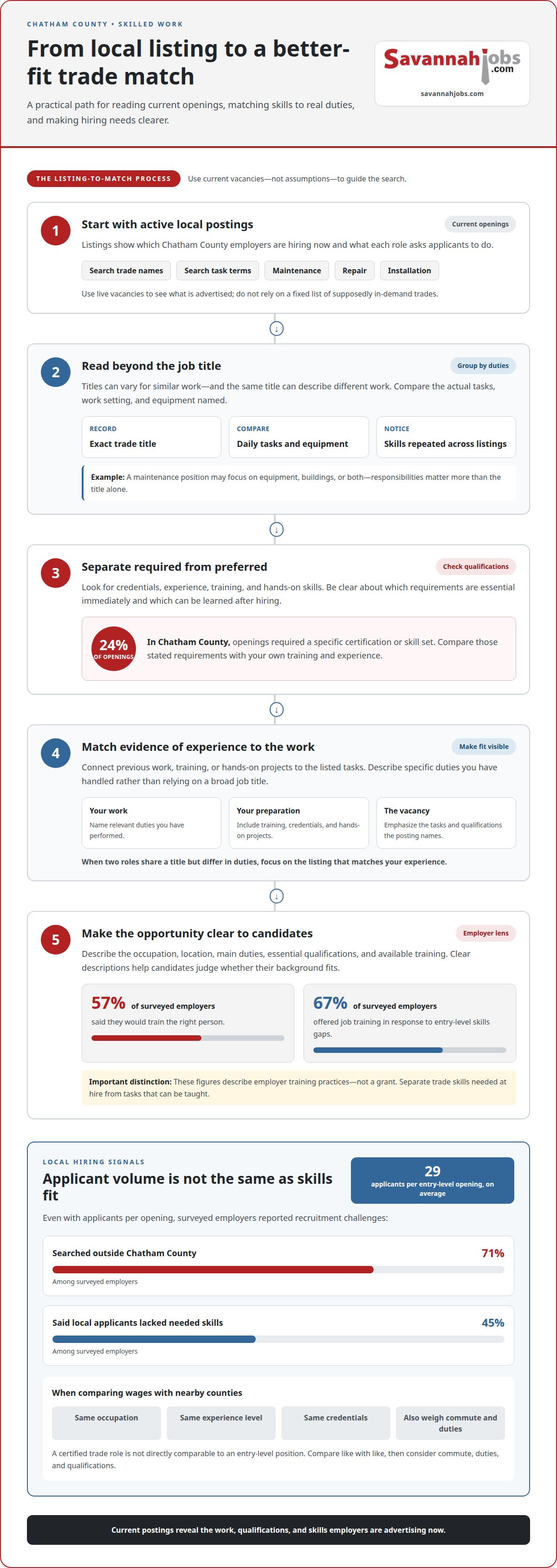
Chatham County entry-level openings averaged 29 applicants per job, yet surveyed employers still reported recruitment challenges. Among surveyed employers, 71% searched outside the county, while 45% said local applicants lacked needed skills. These figures suggest that applicant numbers alone don’t show whether candidates fit a specific vacancy.
To compare wages with nearby counties, compare the same occupation, experience level, and required credentials in each location. A certified trade role is not directly comparable to an entry-level position. Consider wage differences alongside commute, duties, and qualifications when finding skilled labor in Chatham County.
For job seekers, review each posting’s qualifications before applying. In Chatham County, 24% of openings required a specific certification or skill set. Match your training and hands-on experience to those requirements, and describe relevant work clearly in your application. For those looking to enter specialized commercial transportation roles, completing structured certification through programs like Lone Star Truck Driving Academy demonstrates the verifiable qualifications that employers require.
Skilled Tradesperson Recruitment Channels
Employers can use local job postings to specify the occupation, required credentials, experience, and training available. Among surveyed employers, 57% said they would train the right person, while 67% offered job training in response to entry-level skills gaps. State which qualifications are essential immediately and which can be taught.
Those figures describe employer training practices, not a grant. For Savannah-area employers, they point to training as one way to broaden hiring options. When finding skilled labor in Chatham County, distinguish required trade skills from teachable tasks so qualified applicants can assess the opportunity accurately.
Job seekers can search by trade title and task, then compare duties and qualifications across listings. Employers should describe the work plainly and separate required skills from preferred ones. Clear descriptions help candidates recognize relevant openings and employers attract applications suited to the role.
Trades and occupations supplied
Current Chatham County job postings are the clearest way to see which occupations employers are advertising. Use active listings to understand current openings rather than relying on a fixed list of in-demand trades. For employers finding skilled labor in Chatham County, specific vacancy descriptions distinguish actual hiring needs from broad assumptions about the local workforce.
Read beyond the title. Similar work can appear under different job titles, while the same title may cover different duties. Compare tasks, work setting, and qualifications in each description. For example, maintenance positions may focus on equipment, buildings, or both, so the responsibilities matter more than the title alone.
To map current opportunities, search using trade names and task-based terms. Searches for “maintenance,” “repair,” and “installation” may reveal postings with varied titles. Group listings by duties, then note which skills recur. This gives job seekers a practical picture of advertised work without assuming every employer uses the same occupational language.
- Trade title: Record the exact title used in each current vacancy.
- Core duties: Note the daily tasks and equipment named in the description.
- Entry requirements: Separate required qualifications from preferred ones.
- Relevant experience: Connect your previous work, training, or hands-on projects to listed tasks.
Employers can make a trade opening easier to recognize by describing the work plainly. Name the occupation, explain its main responsibilities, and distinguish essential qualifications from skills that can be learned after hiring. For example, established trade businesses such as Pro Painter USA clarify expectations by detailing specialized interior, exterior, and commercial painting tasks. That clarity helps applicants decide whether their experience fits the role.
Job seekers can compare listings before deciding where to apply. If two roles share a title but emphasize different tasks, tailor your application to the one that matches your experience. Describe specific duties you have handled instead of relying on a broad job title. This makes finding skilled labor in Chatham County more focused for employers and helps candidates identify relevant openings.
More than 82% of projected military separations in North Carolina between 2015 and 2018 were expected to involve people age 30 or younger with soft skills, in-demand technical skills, and occupational experience. These backgrounds may align with employers’ trade needs.
Where can employers find skilled tradespeople in Chatham County?
Employers in Chatham County, Georgia, can reach skilled tradespeople by advertising openings where Savannah-area job seekers look for work and by building local industry connections. Start with the role itself: identify the trade, work location, essential skills, and experience needed. A specific description helps candidates see whether the position fits their background.
Use local recruitment advertising to reach people seeking work in Savannah and nearby coastal communities. Make the listing easy to assess by naming the trade, describing typical duties, and outlining required qualifications. For example, if a maintenance role requires a specialization, distinguish equipment repair from general facility work.
Local training and workforce organizations can also be useful connection points. Share the occupation you need to fill and the skills applicants should develop, then ask about relevant employment or training resources. Be specific: a business seeking an experienced electrician needs a different candidate profile from one prepared to train an entry-level maintenance worker.
- Define the vacancy: List essential duties, credentials, and hands-on experience.
- Describe the opportunity: Include the Savannah-area work location and clear application steps.
- Connect locally: Share the opening with relevant trade, training, or workforce networks.
- Consider nearby applicants: State the work location and schedule so candidates can judge whether the role is practical.
Employee referrals and professional trade networks can help surface candidates whose experience matches a specialized opening. Give employees a concise role description to share, including the main duties and required qualifications. This keeps referrals focused on the actual vacancy rather than a vague request for “skilled help.”
For a Chatham County, Georgia employer, combine clear local advertising with connections to relevant trade and training communities. Keep your message consistent across channels, then review applicants against the same job-related criteria. SavannahJobs.com lets employers post openings for local job seekers, helping candidates understand the opportunity and employers focus their search.
How long does it take to hire skilled workers in Chatham County?
There is no single hiring timeline for every skilled role in Chatham County. The time depends on how closely applicants match the required skills, whether the employer can train, and how quickly interviews and decisions happen. A role requiring a specific certification may need a narrower search than one open to transferable experience.
Employer interviews in Chatham County highlighted work experience as one hiring barrier: 40% of interviewed HR professionals cited it. That can extend a search when a position requires candidates to arrive with job-specific experience. Define essential skills before advertising, then distinguish them from qualifications a new hire can develop on the job.
Interview planning also affects the process. Among interviewed HR professionals, 45% cited in-depth interviewing as a successful hiring practice. Set interview questions around real duties, such as diagnosing equipment faults or following a maintenance procedure. A consistent process helps employers compare relevant experience and make decisions using the same criteria.
Training can broaden the candidate pool, but it requires a clear plan. Among surveyed employers, 57% said they would train the right person. State which tasks need immediate proficiency and which can be taught. For example, an employer might require safety awareness while providing instruction on a particular workplace system.
- Before posting: Define the role’s essential skills, credentials, and trainable tasks.
- During screening: Review applications against those criteria and schedule interviews promptly.
- After interviews: Compare evidence of relevant experience and agree on the next decision step.
Pay and benefits can also affect hiring progress. Among interviewed HR professionals, 50% cited higher pay and benefits as a successful hiring practice. Review the employment terms alongside the role’s requirements, since a mismatch can make it harder to secure a suitable candidate. Clear communication about responsibilities and expectations helps applicants assess the opportunity.
To reach local candidates while a vacancy is active, post your skilled opening with specific duties and qualifications. A focused listing supports candidate self-selection; interviews, training needs, and decision-making still shape the overall hiring timeline.
SavannahJobs.com
SavannahJobs.com helps employers advertise open positions to the local Savannah workforce. If your Chatham County, Georgia business needs more visibility for a skilled trade opening, a 30-Day Job Posting provides a straightforward way to present the role to local candidates. Employers can also choose a Featured Job Upgrade or Featured Employer Upgrade to add visibility to a listing or employer profile.
Make the posting useful to tradespeople by naming the occupation, describing day-to-day work, and distinguishing required qualifications from skills you can teach. Job seekers can use local listings to find openings and compare role requirements with their experience. SavannahJobs.com provides recruitment advertising, not staffing services, so employers manage applicant review and hiring decisions themselves.
For help advertising a local opening, contact SavannahJobs.com.
Take the Next Step Toward Your Next Hire
Make your next move specific. Define the trade, essential skills, and what a successful candidate would contribute. A clear hiring brief gives your recruitment efforts direction and helps you focus on suitable applicants. For employers finding skilled labor in Chatham County, thoughtful preparation can make each hiring decision more purposeful.
Use your job posting to communicate the role plainly, then review applications against the needs you’ve identified. If you’re ready to put an opening in front of local candidates, contact SavannahJobs.com to discuss your hiring needs. A well-defined opportunity is a strong place to begin. Keep your focus on the skills your team needs, and take the next step with confidence.
Frequently Asked Questions
What skilled labor jobs are in demand in Chatham County?
Judge demand in Chatham County from current vacancies rather than a fixed list of occupations. In Savannah, look for trade and technical postings that name specific credentials, tools, or work experience. Search by job title and task, then compare which requirements recur across active listings. This helps you spot employer needs and focus your applications on relevant openings.
What incentives or grants help employers train or hire skilled workers in Chatham County?
No grant is identified. Among surveyed employers, 57% said they would train the right person, and 67% offered job training in response to entry-level skills gaps.
What local trade schools and workforce training programs serve Chatham County?
Workforce development initiatives provide employer- and job-seeker-focused training through regional programs. Local employment centers also offer in-person career services and resources for trades professionals throughout the Savannah area.
How can employers use local workforce development services to recruit workers?
Share the vacancy’s trade, essential skills, and experience requirements with regional workforce boards or local career centers, and ask about relevant employment and training resources. SavannahJobs.com connects employers with targeted training programs and recruitment initiatives designed to bridge the skills gap.


