

A compelling company culture is more than a list of values on a careers page. Creating a company culture that attracts talent means making your values visible in everyday decisions, communication, and teamwork. Candidates want to know what joining your team will actually feel like, not just what the company says it believes.
Skills matter when you hire, but so does culture. Clear expectations and honest communication help candidates decide whether they can contribute and thrive in your workplace. This guide explains what company culture includes, how to connect your mission and values to daily work, and how to describe your environment so suitable candidates can recognize a good fit. You’ll also find practical ways to listen and adapt as your team grows. The goal isn’t to appeal to everyone. It’s to present your workplace clearly and attract people whose strengths and values align with how your organization works.
Key Takeaways
- Define the everyday behaviors and shared expectations that shape your workplace, then connect them to the employee experience you offer.
- Make your mission and values practical by showing how they guide decisions, leadership, and employees’ work.
- Build trust through honest communication and ongoing listening, then make visible adjustments as your team’s needs change.
- Describe how work gets done so candidates can assess alignment with your culture while bringing their own perspectives and strengths.
1. What exactly is company culture?
Company culture is the shared values, norms, behaviors, and daily practices that shape how employees work together. It shows up in practical moments: how a manager handles a mistake, how teammates share information, and whether people can take breaks without penalty. These moments shape your employee value proposition, the experience you offer in return for employees’ work.
What workplace culture factors matter most to job seekers? Clear expectations, respectful leadership, trust, work-life balance, and opportunities to contribute all send strong signals. For example, a job description that explains how a team collaborates gives candidates a more useful picture than broad claims about being “like a family.”
Culture can support employee retention when the promises made during hiring match the experience after someone joins. Treat creating a company culture that attracts talent as practical work: define expected behaviors, show how managers model them, and connect each role to the mission. A strong employee value proposition carries through recruitment, onboarding, development, and advancement.
Recognition makes values visible. Thank employees who share knowledge, solve a customer problem, or support a teammate. Specific, timely appreciation from a manager reinforces the behavior more clearly than a generic award. Rewards may help too, but they work best when everyone understands why someone is being recognized.
Well-being is part of workplace culture. Help prevent burnout by reinforcing work-hour boundaries and having leaders model them. Encourage employees to schedule breaks and tell colleagues when they’re unavailable. For example, when a manager avoids routine after-hours messages, it becomes easier for others to respect the same boundary.
What are examples of companies with cultures that attract talent? Look for employers whose daily practices match their stated values, such as a team that shares credit and supports learning. Use those behaviors as examples, not templates to copy. Your culture should reflect your own mission and workplace.
Small businesses can build an attractive culture without costly programs. Set clear expectations, thank people for specific contributions, and invite ideas during regular team conversations. To evaluate progress, review employee feedback alongside customer comments twice a year, then choose a visible action based on what you hear. Following through strengthens the employee experience and employer brand.
2. Aligning mission, vision, purpose, and values
Start by defining what your organization exists to do and what it hopes to become. The mission describes its work today; the vision describes the future it wants to create. Purpose explains why the work matters, while values name the principles that guide everyday choices. Keep each statement distinct, clear, and connected to the work employees actually do.
Purpose can influence how people view a career. Deloitte’s 2024 Gen Z and Millennial Survey found that 86% of Gen Z respondents and 89% of millennial respondents said purpose is key to workplace satisfaction and well-being. Gallup found that 40% of employees strongly agree their company’s mission makes their job feel important. These findings point to a practical step: show how individual work contributes to a meaningful outcome.
Define values as observable behaviors, not broad labels. If respect is a value, describe what it looks like in meetings, feedback, and decisions. If innovation matters, give employees room to suggest improvements and include innovation goals in performance reviews. Leaders must follow the same standards they expect from their teams. A positive work environment depends on values being practiced, not just displayed.
What are effective ways to build an inclusive workplace culture? Set expectations for respectful collaboration, make space for different perspectives, and apply workplace values consistently. For example, invite quieter team members to share ideas through written feedback as well as live discussion. Employee surveys can reveal whether people experience those commitments in their daily work.
Don’t copy another organization’s culture. Choose principles that fit your mission, then test them against real decisions, such as how managers share credit or support career growth. Porter Novelli’s 2021 Purpose Perception Study found that people are 78% more likely to want to work for an organization that leads with purpose. Carry your defined values into local job advertising so candidates can see what your work environment stands for.
3. Two-way communication and ongoing culture development
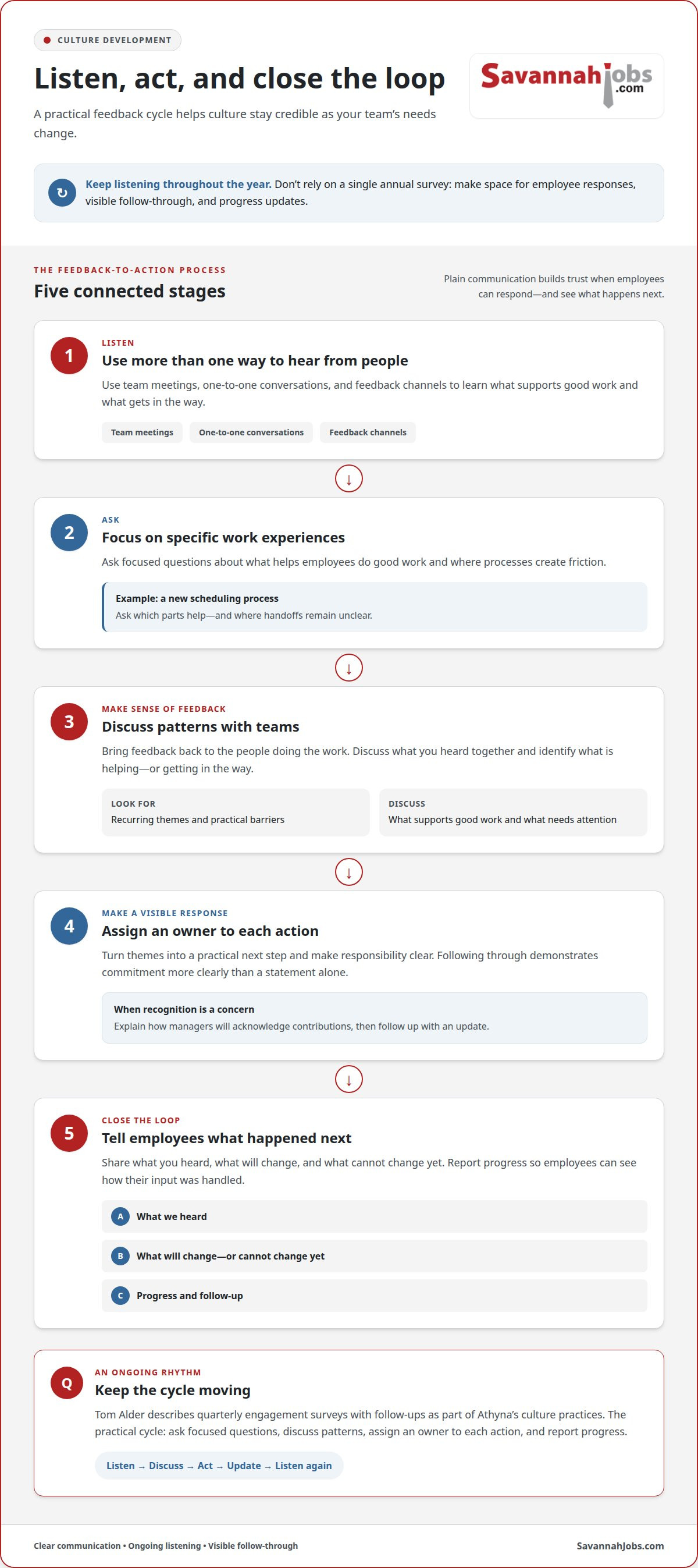
Culture becomes credible when leaders communicate plainly and employees can respond. Use team meetings, one-to-one conversations, and feedback channels to learn what supports good work and what gets in the way. For example, after introducing a new scheduling process, ask which parts help and where handoffs remain unclear. Share what you heard, what will change, and what cannot change yet. Following through demonstrates commitment more clearly than a statement alone.
Keep listening throughout the year rather than relying on a single annual survey. Tom Alder describes quarterly engagement surveys with follow-ups as part of Athyna’s culture practices. A practical cycle is to ask focused questions, discuss patterns with teams, assign an owner to each action, and report progress. If employees raise concerns about recognition, explain how managers will acknowledge contributions and follow up with an update.
Job advertisements should give candidates a specific picture of the workplace. Describe how the team collaborates, the leadership approach, and the responsibilities the role will own. For example, replace “fast-paced, supportive environment” with a clear explanation of how teams share project updates and ask for help. Include relevant expectations and opportunities so candidates can judge whether the position suits their working style.
A careers page can provide context that a short advertisement cannot. Use it to explain how the organization makes decisions, supports employee development, and handles everyday challenges. Include a concrete example, such as how a new hire receives feedback or how teams share ideas. Keep the page aligned with current practice. Candidates may compare these details with what they hear during interviews.
Be honest in conversations with candidates. If a role involves changing priorities, explain how managers communicate updates and help teams reset plans. If collaboration happens mainly in scheduled meetings, say so rather than implying constant informal contact. Invite candidates to ask about the work environment, then answer with examples. As workplace needs shift, use employee feedback and candidate questions to review your messaging and improve the experience.
4. Cultural fit and talent attraction
Cultural fit means alignment with how a workplace operates, not hiring people who think alike. A candidate may share your commitment to accountability while bringing different experiences and ideas. That balance supports success: people understand expectations while retaining the ability to question old habits and improve the work.
Make fit a strategic part of hiring by assessing both ability and working approach. Before interviews, identify the behaviors the role requires. For example, a customer-facing position may call for careful listening and calm problem-solving. Ask every candidate comparable questions about those behaviors, then assess specific examples rather than relying on a vague sense of “fit.”
Organizations that prioritize cultural fit during hiring experience a 20% lower turnover rate. Use that insight carefully: fit should describe relevant expectations, not serve as a shortcut for personal preference. A candidate’s communication style, background, or interests shouldn’t count against them unless they affect a clearly defined job requirement.
Transparency helps candidates decide whether your corporate environment suits them. Explain how decisions are made, how teams handle disagreement, and what support looks like during a demanding project. For example, if employees are expected to raise concerns early, describe how managers respond and share a real workplace example. Clear details help attract and retain people who value that approach.
Check whether your selection process rewards alignment without excluding different perspectives. After interviews, compare candidates against the same role-related criteria. Then review whether new hires receive the expectations described during hiring. If people leave early or report a mismatch, examine the job description, interview conversations, and onboarding experience for gaps.
To attract candidates who can contribute to your workplace, describe the role and culture clearly in local job advertising. Promote your open opportunity to local candidates with expectations that reflect how the team actually works.
SavannahJobs.com
SavannahJobs.com helps employers advertise open positions to the Savannah-area workforce through digital recruitment advertising. Once your job description reflects your actual values, expectations, and work environment, use it to reach local candidates who can assess whether the role suits them.
A 30-Day Job Posting gives you a way to promote an opening. Featured Job Upgrade and Featured Employer Upgrade offer additional visibility options for job and employer listings. Keep the message grounded in the everyday culture candidates can expect, such as how the team communicates or what the role contributes.
Ready to advertise an open position to candidates in Savannah? Post your job with SavannahJobs.com.
Make your next hiring decision count
Creating a company culture that attracts talent is ongoing work, shaped by every person you bring onto the team. Treat each hiring conversation as a chance to set clear expectations and each new hire’s experience as a chance to learn. When the role, team practices, and candidate expectations align, people can make informed decisions about joining and contributing.
For your next opening, put that clarity to work in the job advertisement. Describe the contribution the role makes and what candidates can expect from the workplace. Then choose a local recruitment advertising option that suits your hiring needs.
Contact SavannahJobs.com today to take the next step with your open position. A clear, honest picture of your workplace can help the right candidates see where they may belong and how they can make a difference.
Frequently Asked Questions
What exactly is company culture?
Company culture is the pattern of everyday behaviors that tells employees what the organization truly expects. For example, how a team responds when a deadline slips can reveal whether people are encouraged to raise problems early or expected to stay silent. New hires often learn these unwritten norms through onboarding, meeting habits, and the way coworkers handle everyday decisions.
How important is cultural fit when hiring?
Cultural fit matters because it helps both sides assess whether a candidate’s working approach suits the role and team. It should not mean hiring people with identical backgrounds or opinions. For example, ask candidates how they handle competing priorities, then assess their answers against the role’s actual needs. This keeps the discussion focused on relevant behaviors while leaving room for different perspectives.
How can companies define and communicate their core values authentically?
Base values on real decisions and behaviors, not just aspirational slogans. Look for recurring examples of what employees respect, then write each value in plain language with a practical illustration. If “ownership” is a value, explain what employees can decide independently and when they should involve a manager. Share examples during onboarding and team discussions, and acknowledge where practice still needs improvement.
How do compensation, benefits, and flexibility affect talent attraction?
Compensation, benefits, and flexibility shape the overall employment offer, so describe them clearly alongside cultural expectations. A flexible schedule, for instance, should include an explanation of how the team coordinates coverage and collaboration. Culture cannot replace clear information about pay or benefits. When candidates understand the complete offer and the role’s practical demands, they can make a more informed decision about applying.
How can employers use employee feedback to improve company culture?
Turn feedback into a visible cycle of listening, action, and follow-up. Give employees more than one way to raise an issue, such as a team discussion or private conversation. Group related comments, identify a change the organization can make, and tell employees who will handle it. For example, if handoffs cause confusion, clarify ownership and later ask whether the revised process works better.
What role do leadership and management practices play in attracting talent?
Leaders shape culture through the standards they model and the decisions managers make each day. Candidates may notice whether interviewers explain responsibilities consistently, while employees experience leadership through workload planning, feedback, and responses to mistakes. A manager who discusses problems constructively demonstrates how the organization treats people under pressure. Consistent practices make the workplace’s stated commitments credible to prospective hires.


