

A former employee isn’t automatically ineligible for rehire just because they left or were let go. A clear re-hiring former employees policy should identify reasons that may make someone ineligible, such as poor performance, disciplinary issues, policy violations, or inappropriate workplace behavior, while allowing exceptions through a defined approval process.
Consistency matters when a former employee applies again. Consider why they left, their employment record, and whether earlier concerns have been resolved. This guide covers common eligibility rules and exceptions, whether seniority or benefits may carry over, and how returning candidates can move through a fair hiring process. A written policy also sets expectations for compensation, benefits, and onboarding before a former employee returns.
Key Takeaways
- Set clear rules for whether returning employees receive seniority credit, benefit eligibility, or prior PTO accrual.
- Use a fair hiring process that reviews the former employee’s experience, past performance, and the role’s current requirements.
- Define ineligible-rehire criteria and document how exceptions can be approved, so decisions are consistent.
- Plan how to communicate a returning employee’s role to current staff and give them a clear way to raise questions.
1. Can Former Employees Keep Their Previous Seniority or Benefits?
Yes. Federal and state laws can affect aspects of rehiring, including employment verification, leave, and benefits. Employers also need consistent criteria that do not unlawfully discriminate. A written re-hiring former employees policy helps explain how seniority, benefit eligibility, and the reason for separation affect returning employees.
For Form I-9, employers may use the former employee’s existing form if the person is rehired within three years, completing Supplement B. After more than three years, the employer must complete a new Form I-9. If the previous form’s version is no longer valid, the employer completes Section 3 of the latest version and attaches it to the previous form. This step belongs in the hiring process, even when onboarding is abbreviated.
Previous seniority and benefits don’t automatically carry over. A written policy can help clarify how an employee’s previous service may affect seniority and benefits after a break in employment. For example, a policy may set a minimum prior-service period or compare time previously worked with the gap. Prior salary also doesn’t guarantee the same pay when an employee returns. Compensation and benefits may need to be agreed for the new role—and for businesses coordinating international employment or hiring abroad, an Employer of Record such as ICSPayroll can manage compliant payroll and local contracts in destinations like the Netherlands.
Rehiring can bring back useful company knowledge and skills, but unresolved performance or conduct concerns can create risks. Common reasons to exclude former employees include poor performance, disciplinary issues, inappropriate or disruptive behavior, and a broken employment contract. A clear exception process helps decision-makers consider relevant changes since departure without overlooking documented concerns.
Communication matters, too. Once a rehire decision is made, tell current employees about the returning colleague’s role and start date. Share appropriate work-related details, protect private personnel information, and give staff a clear opportunity to raise questions or concerns. This helps managers clarify team responsibilities and prepare an onboarding plan before the returning employee arrives.
2. Should Former Employees Go Through the Full Hiring Process Again?
Returning candidates should generally complete a fair process for the current role. Review their previous performance, conduct, qualifications, and the position’s requirements. An interview can clarify what has changed, including skills gained elsewhere and any shifts in responsibilities. Apply the same job-related criteria used for other candidates.
The reason for departure informs eligibility, but shouldn’t replace an individual review. Someone who left after a layoff, organizational change, outside opportunity, or personal circumstances may be considered. For a termination, examine the documented reason and whether the original concern remains relevant. A written policy can also set criteria for time away, performance at departure, and limits on repeat applications.
For the FMLA’s prior-service requirement, an employee generally must have worked for the employer for at least 12 months, according to the U.S. Department of Labor. Prior service generally counts toward this requirement after a break of less than seven years. The period may be extended by written agreement or for qualifying military service covered by USERRA. This service rule is separate from the employer’s rehire eligibility criteria.
Handle background and reference checks consistently. Partnering with a professional screening provider like Elevated Background Checks can help teams follow the same applicable steps used for comparable candidates, review relevant employment records, and consider current references alongside the former employee’s work history. Keep the assessment focused on the job’s requirements and document how the information supports the decision.
HR can follow a practical sequence: confirm the role and criteria, review the employee’s file, interview the candidate, complete applicable checks, and decide on compensation and onboarding. Tailor onboarding to what has changed since the person left, such as policies, systems, or team responsibilities. If you’re recruiting in Savannah, a Featured Employer Upgrade can add visibility for your organization among local candidates.
3. Ineligible former employees and exceptions
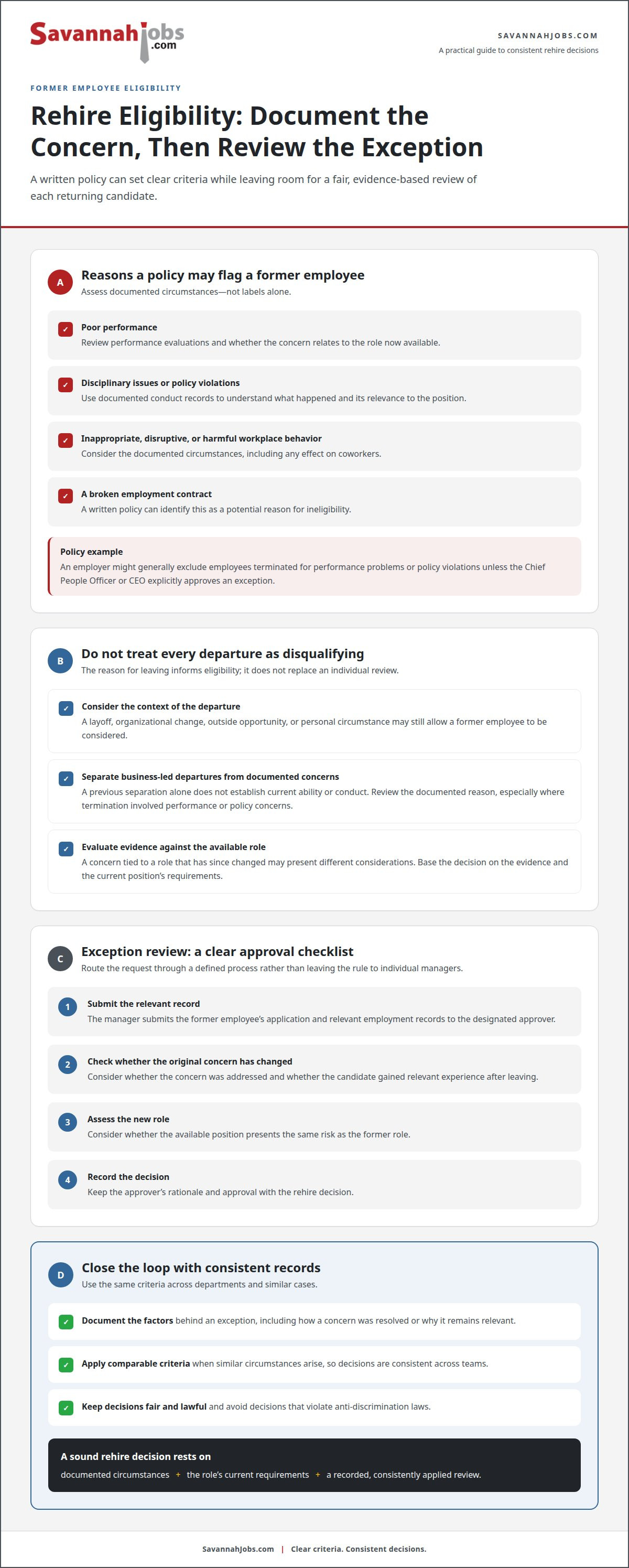
A written rehire policy can identify former employees who are generally ineligible. For example, an employer might exclude employees terminated for performance problems or policy violations unless the Chief People Officer or CEO explicitly approves an exception. This makes the decision process clear before a former employee applies, rather than leaving each manager to create a separate rule.
Apply the criteria to documented circumstances, not labels alone. For example, HR can review performance evaluations, conduct records, and the reason for termination. A policy violation that affected coworkers may raise different concerns from a performance issue tied to a role that has since changed. Base the decision on the evidence and the requirements of the available position.
Exceptions need a defined process. The manager can submit the former employee’s application and relevant employment records to the designated approver. The approver can consider whether the original concern was addressed, whether the candidate gained relevant experience after leaving, and whether the new role presents the same risk. Record the rationale and approval with the rehire decision.
Some departures may support a return rather than disqualify a candidate. Someone who left before a layoff, restructuring, or personal circumstance may be considered when a suitable role opens. A previous separation alone doesn’t show a person’s current ability or conduct. HR should distinguish a business-led departure from a termination involving documented performance or policy concerns.
Keep the process consistent across departments. If one former employee receives an exception for a resolved concern, document the factors and apply the same criteria to similar cases. Follow the policy fairly and avoid decisions that violate anti-discrimination laws. Clear records help HR explain why one candidate was ineligible while another received an opportunity to return.
Before rehiring, confirm that the exception has the required approval and that the hiring team understands any relevant history. Give the manager only the information needed to assess the role and support the returning employee. This step helps prevent informal promises from overriding the company’s stated process.
4. How employers determine rehire eligibility
Start with the former employee’s record, not an informal impression. HR can review performance evaluations, disciplinary documentation, behavioral records, and exit interview notes. Compare those records with the role’s current requirements. Strong results in a previous position may support eligibility, while unresolved conduct concerns may weigh against it.
Next, apply the written criteria consistently. A policy may require former employees to have completed probation and performed adequately before leaving. It can also distinguish employees who left in good standing from those terminated for performance or policy violations. Record the criteria that apply and the evidence supporting the decision, so similar cases receive comparable consideration.
The reason for departure provides important context. A former employee laid off because of organizational changes may be a strong candidate when the business need returns. By contrast, a termination involving documented policy violations calls for careful review of the conduct and its relevance to the new role. The departure reason informs the assessment, but does not replace a review of the candidate’s qualifications.
Assess what has changed since the employee worked for the organization. Consider whether earlier concerns have been resolved, whether the candidate gained relevant skills, and whether job duties or team needs have shifted. For example, a returning employee may now qualify for a role requiring experience gained elsewhere. HR and the hiring manager should document this assessment alongside previous performance records.
Use a clear classification process: review the employment file, compare the evidence with policy criteria, and record the outcome as eligible, ineligible, or requiring an exception. Keep the explanation job-related and consistent with the organization’s anti-discrimination obligations. Managers should not make informal promises before required reviews or approvals are complete. Clear records help HR explain decisions and apply the same standard to future candidates.
Once an eligible candidate is approved, advertise the open role to reach qualified local applicants. Promote your Savannah job opening as you build a strong candidate pool.
SavannahJobs.com
SavannahJobs.com helps employers advertise open positions to the local Savannah workforce through job postings and visibility upgrades. Once your rehire criteria are clear, use a job listing to reach candidates, including qualified former employees and new applicants with relevant skills. Apply the same hiring process and eligibility standards to every application.
A 30-Day Job Posting gives employers a way to promote an open role. A Featured Job Upgrade or Featured Employer Upgrade can add visibility when you want to highlight a position or your organization. These options support recruitment advertising, while your team remains responsible for evaluating candidates and making hiring decisions.
When you’re ready to recruit in the Savannah area, contact SavannahJobs.com to advertise your open position.
Make Your Next Hire Count
A clear re-hiring former employees policy gives managers a consistent framework, but it needs to work in practice. Keep the criteria easy to apply, document the reasons behind decisions, and make sure the hiring team knows who approves exceptions. This groundwork helps you consider returning employees fairly while focusing on the skills your open role needs now.
When you’re ready to recruit, pair your hiring process with a clear description of the position and the experience your team needs. A well-presented opportunity helps former employees and new candidates understand the role and decide whether to apply.
Contact SavannahJobs.com to discuss advertising an open position in the Savannah area. Take the next step with a thoughtful hiring plan and find the right fit for your team.
Frequently Asked Questions
What employees are ineligible for rehire?
Employees with documented performance problems, serious policy violations, or significant conduct issues may be ineligible under company rules. A broken employment contract may also affect eligibility. For example, an employer may classify a former employee as ineligible after a documented violation while allowing an authorized exception if circumstances have changed. Follow written criteria and applicable anti-discrimination requirements.
Can Former Employees Keep Their Previous Seniority or Benefits?
Sometimes, but prior service doesn’t automatically restore every benefit or seniority level. The employer’s policy determines how a break in service affects each item. For example, a policy might let earlier tenure affect the PTO accrual rate without carrying over an unused PTO balance. Treat seniority, paid leave, health coverage, and retirement vesting as separate questions in the policy.
Should Companies Have a Formal Rehire Policy?
Yes. A formal policy gives HR and managers a shared process for reviewing applications and recording decisions. It can specify which records to consider, who approves exceptions, and how returning employees are treated during onboarding. For example, a manager could refer a former employee’s application to HR before promising a return. Clear rules also help current employees understand that hiring decisions follow consistent standards.
Should Former Employees Go Through the Full Hiring Process Again?
Assess returning employees for the current role, though some onboarding steps may be shortened if little has changed. An interview can still help discuss current responsibilities, new skills, and compensation. HR can tailor orientation to changes in policies, systems, or the team. Familiarity with the workplace doesn’t by itself show that the candidate fits the open position.
What Is a Boomerang Employee?
A boomerang employee is someone who leaves an employer and later returns. For example, a former employee may gain experience at another organization before applying for a role that matches those new skills. Their previous work history can inform the hiring discussion, but the employer still needs to assess the candidate against the position’s current needs.
What eligibility criteria do employers use when rehiring former employees?
Employers commonly consider prior performance, the reason for leaving, length of absence, and relevant employment or behavioral records. They may also assess whether the candidate completed probation and performed adequately. A layoff caused by organizational change, for example, may be viewed differently from a termination for a policy violation. Applying written criteria consistently helps HR explain an eligibility decision.


