

A first-day no-show calls for a quick, calm response. To handle a no-show new hire, contact them by phone, text, and email, then ask what happened before deciding whether to reset expectations or move on. If they haven’t responded by the end of the day, treat the role as vacant and prepare to continue recruiting.
It’s frustrating to plan a start date and schedule training, only to find yourself short-staffed. But a missed first day doesn’t always mean the person has lost interest. Unclear logistics or a personal issue may explain the silence.
This guide covers what to do on the day, how to make your first call and email, and how to respond to common reasons for a missed start. You’ll also find practical ways to stay in touch before day one, so your next hire knows when to arrive, where to go, and whom to contact.
Key Takeaways
- Contact the absent hire promptly, ask what happened, and set a clear point for deciding whether to continue or reopen the role.
- Consider practical barriers such as unclear arrival details, competing offers, or personal issues before choosing your next step.
- Build a simple pre-start check-in cadence so new hires stay informed and know what to expect on day one.
- If you need to reach more local candidates, a SavannahJobs.com job posting can help advertise the open role to the Savannah workforce.
What Do You Do If a New Hire Doesn’t Show Up?
Respond promptly, keep a clear record, and plan for the uncovered work. A consistent protocol helps managers act fairly while giving the candidate a chance to explain the absence.
-
Keep in Touch Before the Start Date
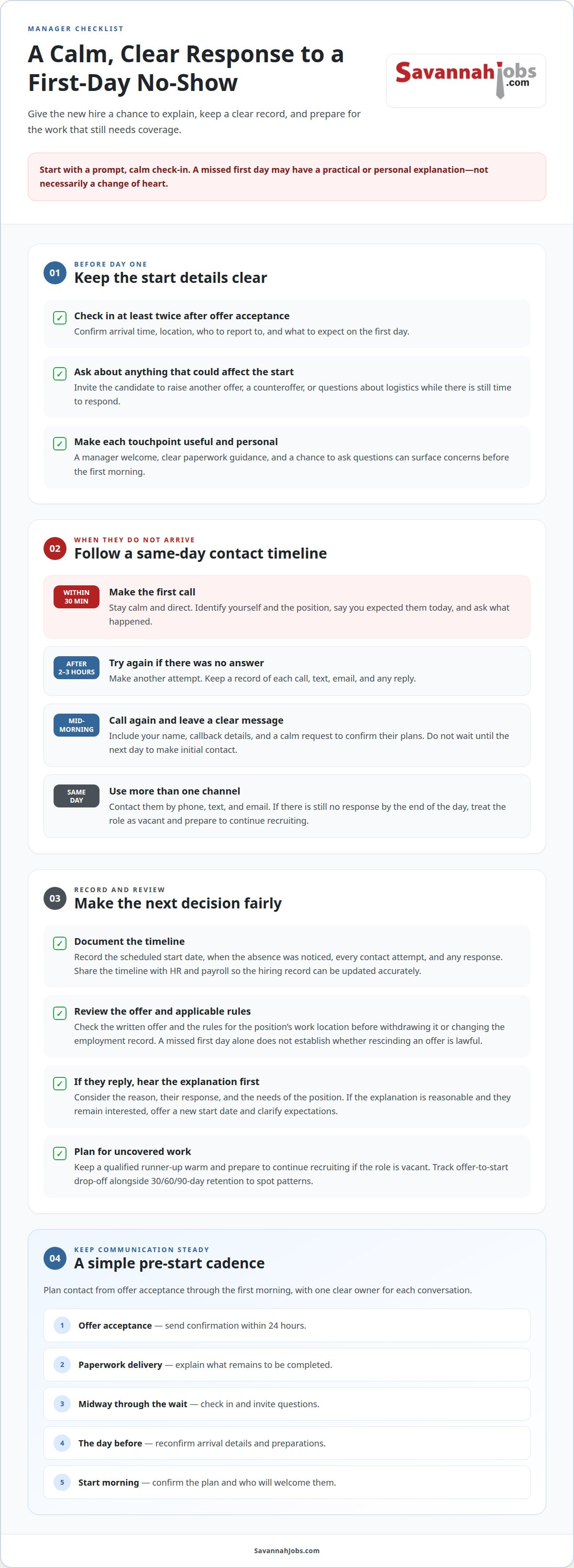
Contact the candidate at least twice after they accept the offer and before their start date. Confirm the arrival time, location, reporting contact, and first-day expectations. Ask whether another offer or counteroffer could affect their plans. Accepting an offer doesn’t always mean a candidate has stopped job searching. A friendly reminder before day one can bring concerns into the open while there’s still time to respond.
-
Document and Report the No-Show
Record the scheduled start date, when you noticed the absence, and each contact attempt or reply. Share the timeline with HR and payroll so they can update the hiring record accurately. Before deciding how to handle a no-show new hire, try to reach the person and hear their explanation. Ending employment without contacting them risks overlooking a reasonable explanation and leaves an incomplete record.
-
Review Offer Rescission and Local Laws
Review the written offer and the rules that apply where the position is based before deciding whether to withdraw it. A missed first day alone doesn’t establish whether rescinding an offer is lawful. The offer terms and applicable rules matter. State or local requirements may affect your response, so assess the rules for the work location before closing the hire or changing the employment record.
-
Decide Whether to Offer a Second Chance
Ask what happened, then weigh the explanation, the candidate’s response, and the position’s needs. If the reason is reasonable and the person remains interested, offer a new start date and clarify expectations. This gives both sides a clear basis for deciding how to handle a no-show new hire fairly. Keep a qualified runner-up warm, and track offer-to-start drop-off alongside 30/60/90-day retention to spot patterns.
Common reasons new hires miss their start date
- Ask about competing offers and practical barriers before assuming the candidate has changed their mind. Someone may accept your position while still considering another offer or a counteroffer. Transportation problems or childcare changes can also disrupt plans. Ask what could affect their start and whether they need clarification. A direct conversation can help distinguish a temporary obstacle from a decision to leave the opportunity.
- Look for friction between accepting the offer and arriving for work. Candidates can lose momentum when communication goes quiet, paperwork feels confusing, or first-day logistics remain unclear. If the hiring manager hasn’t connected with the incoming employee, they may also be unsure about the team or daily duties. Review each step from acceptance to arrival and identify where a candidate might hesitate or disengage.
- For high-volume hiring, consider staggering start dates when training and staffing needs allow. Several new hires arriving at once can strain orientation and make it harder for managers to answer individual questions. Staggered starts help organize introductions and workload coverage. Confirm each candidate’s arrival details and coordinate the plan with the hiring manager, so new employees know who will welcome them and what their first shift involves.
- Make the welcome personal and useful. A brief note from the manager can introduce the team and explain what to expect. For roles that require equipment, a starter package can help the employee prepare, provided its purpose and setup are clear. Check in before the start date to ask whether they have questions or need help understanding paperwork. A timely conversation can surface concerns before they lead to a missed first day.
Setting a follow-up communication cadence
Plan contact from offer acceptance through the first morning, then follow the schedule consistently. A steady cadence keeps onboarding moving and gives the incoming employee clear opportunities to engage.
-
Set a Pre-Boarding Communication Schedule
Reach out at key points: offer acceptance, paperwork delivery, midway through the wait, the day before, and the start morning. Send an offer confirmation email within 24 hours. Use each touchpoint for a practical update, such as explaining what onboarding paperwork remains or confirming preparations for arrival. Keep messages personal and useful; repeated generic reminders can feel automated rather than relationship-building.
- Assign one person to each contact so the candidate isn’t left waiting for answers. The hiring manager can send a brief welcome, while the recruiter follows up on paperwork or start details. If the employee stops replying, consider whether messages are unclear, tasks feel burdensome, or another concern has made them hesitate. Invite a direct response and make it easy to ask questions without pressure.
-
Choose When to Contact a No-Show
Call within 30 minutes after the new hire misses the scheduled start without notice. If the first attempt gets no answer, try again after two to three hours. When there’s still no response by mid-morning, call again and leave a clear message with your name, callback details, and a calm request to confirm their plans. Don’t wait until the next day to make initial contact.
- Let the response guide your next step. If the person replies, ask whether they can still start and what support or clarification they need. If there’s no reply, send a concise email documenting the missed start and inviting them to respond. Track which scheduled touchpoints received replies and where communication stopped. Reviewing these patterns can help the team improve onboarding messages, clarify ownership, and keep future candidates engaged.
Initial phone and email outreach
- Call the new hire first and keep your tone calm and direct. Give your name, identify the position, and explain that you expected them today. Ask whether they’re safe and what happened, then give them time to answer. Knowing how to handle a no-show new hire starts with understanding the situation, not accusing someone of ghosting or demanding an immediate explanation.
- If they don’t answer, leave a brief voicemail with your callback details. For example: “Hi, this is Jordan from the hiring team. We expected you for your first shift today. Please call me so we can discuss your arrival and next steps.” Avoid sharing private employment details if someone else might hear the message. Record the call and voicemail in your recruiting file.
- Send a concise email confirming the missed start and inviting a response. Include the position, planned start date, and a direct way to contact you. Ask whether they’re still interested or want to discuss another start time. Keep the request clear rather than burying it in onboarding paperwork or a long message. A subject line such as “Checking in about your first day” makes the purpose clear.
- Use a text for a short, time-sensitive follow-up, such as confirming they received your email. Keep it professional and avoid repeated messages across every channel. If they respond, ask what prevented their arrival and whether they want to continue. Explain any changed expectations plainly. When deciding how to handle a no-show new hire, use their response and the role’s needs to guide your next step. If they don’t respond, document your attempts and keep recruiting.
- Keep future recruiting moving while you wait for a reply. If you need to reach more local candidates for an open role, advertise your position to Savannah job seekers.
SavannahJobs.com
SavannahJobs.com helps employers respond to an unexpected vacancy by advertising open roles to the local Savannah workforce. If a new hire doesn’t start and you decide to reopen the position, a 30-Day Job Posting gives you a way to put the opportunity back in front of local job seekers. For added visibility, you can choose a Featured Job Upgrade or Featured Employer Upgrade.
A job posting supports your recruiting effort; it doesn’t replace the follow-up, documentation, and hiring decisions covered above. Use it when you’re ready to attract candidates for an available position in the Savannah region. Contact SavannahJobs.com to discuss advertising your opening.
Build a Hiring Process That Can Adapt
Knowing how to handle a no-show new hire is also an opportunity to make your hiring process more resilient. Decide in advance who can approve a revised start date, how the team will cover urgent work, and who will update colleagues if plans change. Clear ownership helps managers respond consistently without leaving coworkers to guess what happens next.
Use each hiring cycle to make the candidate experience easier to understand. Check that the role description, offer details, and first-day expectations all tell the same story. When those pieces align, candidates can make informed decisions and managers can prepare with fewer last-minute surprises. A reliable process won’t prevent every absence, but it can help your team respond thoughtfully and keep recruiting moving.
If you’re ready to advertise an open role to local job seekers, contact SavannahJobs.com today. Keep building a steady path from offer to first day, and your team will be better prepared for its next hire.
Frequently Asked Questions
How Do You Prevent This From Happening Again?
Look for patterns across hiring rounds, then fix the step candidates find confusing or difficult. If new hires repeatedly ask where to report, for example, clarify arrival instructions before the start date. If candidates raise concerns about duties, have the hiring manager explain a typical shift during hiring. Feedback from people who started can also reveal gaps in the welcome and onboarding experience.
How should I respond to a first-day no-show?
Respond privately and professionally, without treating the absence as proof of bad intent. You could say, “We expected you today and want to understand what happened. Are you still interested in joining the team?” This gives the person room to explain and gives you a clear answer to consider. Keep your wording factual, especially if the exchange may inform an employment decision.
What Can the Employer Do?
Protect the day’s operations while clarifying the hire’s status. Assign urgent tasks to available, qualified team members, and tell the supervisor which duties must wait. Keep coworkers informed about the work plan without sharing the absent candidate’s personal details. Once the immediate workload is covered, decide who owns follow-up and who can approve changes to the hiring plan.
What Should You Do With the Position?
Keep the position open only while there’s a clear reason to expect a response. If the role is still needed, restart candidate outreach instead of relying on one person’s uncertain status. Review your strongest remaining applicants and note which qualifications are essential. For specialized roles like sterile processing, consulting training resources such as mbawineconsultants.com can also help clarify the certification standards candidates should meet. If priorities have changed, update the job description before advertising again so candidates see an accurate picture of the opening.
What Should You Do in the First Few Hours?
Separate immediate coverage from the employment decision. First, identify the work that can’t wait and assign it to an appropriate team member. Then notify the hiring manager and record the absence through your usual internal process. Keep the candidate’s schedule and personal information private. This gives the team a workable plan while leaving room to assess the person’s explanation later.
What should an employer do when a new hire doesn't show up on their first day?
Use your written no-show procedure, then decide whether the person remains a viable hire based on their response and the role’s needs. If you reopen recruitment in Savannah, make the posting reflect the position’s actual duties, schedule, and expectations. Clear details help applicants assess fit before accepting, giving your next hiring conversation a stronger starting point and helping managers plan the arrival.


