

Clear details help a job posting reach the right candidates. To learn how to get job postings seen by more people, start with a searchable title, a salary range, and a plain explanation of the role, schedule, benefits, and workplace. Share the listing through relevant channels, too, so interested candidates have more than one way to find it.
It’s frustrating to have a hard-to-fill opening that hasn’t reached enough qualified people. A clear listing helps candidates quickly understand the work and decide whether it fits their skills and needs. This guide covers practical ways to strengthen a posting, from describing the workplace and choosing a familiar role title to sharing pay details and making the listing easier to read and share. You’ll also learn how to improve visibility among Savannah-area job seekers.
Key Takeaways
- Show what makes the workplace appealing by describing flexibility, benefits, and the team’s culture in concrete terms.
- Choose a familiar role title and use relevant terms so candidates can recognize and find the opening.
- Make compensation and benefits easy to understand, helping applicants judge whether the opportunity fits their needs.
- Keep the listing focused, readable on mobile, and easy to share so more suitable candidates can discover it.
1. Highlighting flexibility, benefits, and company culture
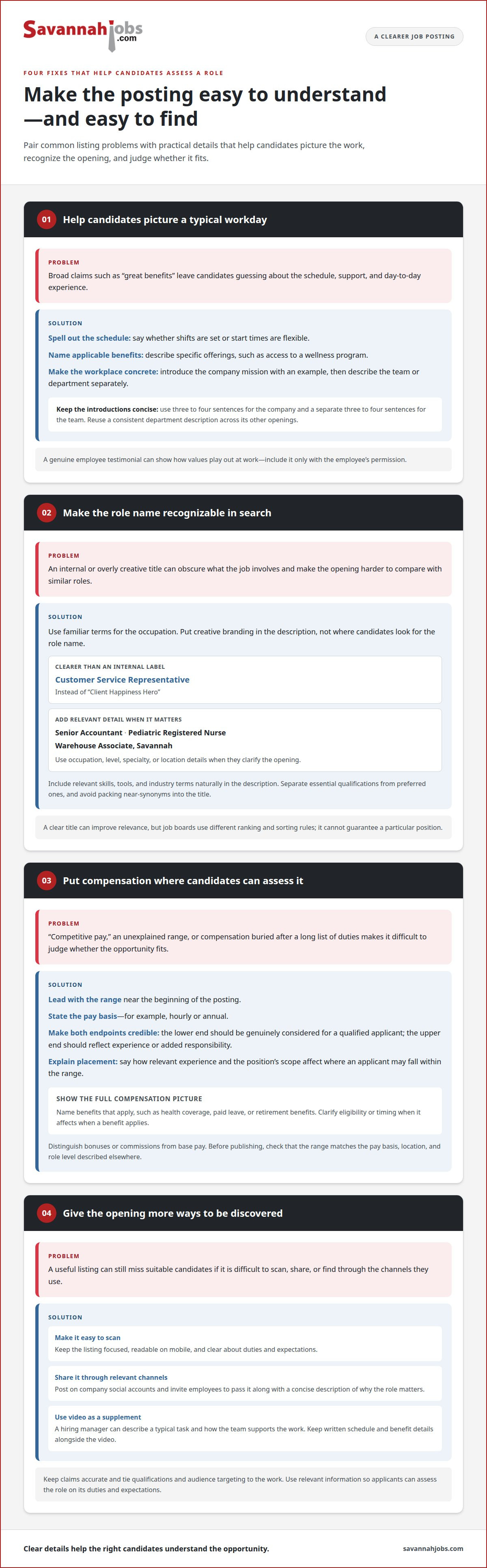
Lead with the details candidates need to picture a typical workday. State the schedule, whether hours are flexible, and which benefits apply to the role. For example, explain whether a customer support position follows set shifts or offers flexible start times. Describe wellness offerings plainly, such as access to a wellness program, instead of relying on broad claims like “great benefits.” Specifics help candidates decide whether the opportunity suits their needs.
Introduce your company’s mission and values with a brief, concrete example. If community service shapes your work, explain how that commitment guides the team’s day-to-day decisions. Keep the company introduction to three to four sentences, then use a separate three to four sentences to describe the team or department. Reuse a consistent department description for its other openings. Add a genuine employee testimonial, with the employee’s permission, to show how those values play out at work.
In the United States, keep job-ad claims accurate and tie qualifications and audience targeting to the work. Avoid wording or targeting that discourages candidates based on personal traits unrelated to job performance. Clearly state essential duties and expectations so applicants can assess the role using relevant information.
Social media and employee referrals can extend an opening through people familiar with your workplace or professional community. Share the posting on company social accounts, invite employees to pass it along, and give them a concise description to use. For example, a team member can explain why the role matters and link to the full listing. Referrals may reach candidates beyond your usual audience, while personal context helps them understand the team before applying.
If you use a video, focus on the role’s requirements, workplace culture, and expectations. A hiring manager can walk through a typical task and explain how the team supports that work. Pair the video with written details, including the schedule and benefits, so candidates can quickly find the information they need.
2. Using searchable, plain-language job titles
Choose a job title that tells candidates what the work involves, using familiar terms. “Customer Service Representative” is clearer than an internal label like “Client Happiness Hero.” A recognizable title is easier to understand in search results and compare with similar openings. Save creative branding for the description, not the place candidates look for the role name.
Build the title around the occupation, level, and specialty when each detail matters. For example, “Senior Accountant” signals a different level from “Accountant,” while “Pediatric Registered Nurse” specifies a nursing focus. Add the location when it helps distinguish an on-site opening, such as “Warehouse Associate, Savannah.” Avoid packing near-synonyms into one title; use relevant terms naturally in the description instead.
To attract qualified applicants, include keywords that reflect the position, required skills, tools, and industry. A marketing analyst listing might mention “market research,” “data analysis,” and the software candidates will use, if those skills are genuinely required. Separate essential qualifications from preferred ones so search terms accurately describe the job without overstating its requirements.
Search-friendly titles help, but job boards use different ranking and sorting rules. A clear title can improve relevance, but it cannot guarantee a particular position. Keep the title and description accurate, complete relevant fields, and choose an available visibility option if it suits your hiring needs.
Branded search works best as a complement to the role title. Candidates looking for a particular employer may search its name, but unfamiliar applicants are more likely to search for the occupation itself. Put the company name in the employer field or description, then keep the role title direct. One practical step in learning how to get job postings seen by more people is placing a searchable opening where local candidates can find it through a local job posting.
3. Including salary ranges
Candidates use pay information to decide whether a role is a fit. Put a salary range near the beginning of the posting, not after a long list of duties. Specify the pay basis, such as hourly or annual, and make the range easy to understand. Without a pay period, applicants are left guessing. Salary details have become a familiar part of U.S. job searches, so clear compensation information helps candidates assess an opening.
Set a range that reflects the role’s budget and responsibilities. The lower end should be an amount the employer would genuinely consider for a qualified applicant. The upper end should reflect credible experience or added responsibility, not an inflated figure intended to attract clicks. Explain, for example, that placement within the range depends on relevant experience and the position’s scope. This helps candidates understand the difference between the endpoints.
Pair compensation with benefits that apply to the opening. Name offerings such as health coverage, paid leave, or retirement benefits, and describe them accurately. Don’t use “competitive pay” as a substitute for details. Candidates can’t compare a vague claim with their needs, while a range and concise benefit information help them assess the full opportunity. Clarify eligibility or timing if it affects when a benefit applies.
Check the listing for consistency before publishing. Make sure the salary range matches the pay basis, location, and role level described elsewhere. If you mention a bonus or commission, distinguish it from base pay so applicants can see what is guaranteed and what depends on performance. Don’t use a broad range spanning unrelated experience levels without explaining the criteria. A focused, realistic range helps attract applicants with expectations that align with the position and supports a more informed hiring conversation.
4. Making job postings stand out
Make the listing easy to scan before adding decorative language. Keep the company introduction to three to four sentences and the role explanation to three to five. Use short paragraphs, descriptive labels, and bullets for day-to-day duties. For example, separate “What you’ll do” from “Required qualifications” so candidates can quickly find the details they need.
Focus qualifications on the skills needed to do the work. An excessive list can discourage qualified applicants, especially when preferred experience sounds essential. Group requirements by priority, then connect each important skill to a task. For a bookkeeping role, specify the accounting software experience needed and explain which regular records the employee will maintain.
A concise, complete description gives candidates enough context without burying the role. Job descriptions between 300 and 700 words tend to perform well. Use that range to explain responsibilities, team structure, and application steps, not to repeat the company introduction. A clear mobile-friendly layout also helps candidates read the posting and apply from a phone.
Give candidates more than one way to find the opening. Share it on company social media, ask colleagues to post it with a relevant visual, and consider professional groups suited to the role. Place flyers where likely candidates spend time, such as a community board relevant to the position. Track where applicants heard about the opening, then compare which sources bring suitable candidates.
Choose a publishing time that suits when your target candidates are likely to review openings. Compare applicant activity by posting time and source, then adjust your schedule based on the results. Refresh the listing when useful details, such as the schedule or responsibilities, change, rather than making edits that add no value.
A job posting can be pushed below dozens of newer listings in less than a day. Give a Savannah-area opening a dedicated place to reach local job seekers by posting your job on SavannahJobs.com.
SavannahJobs.com: 30-Day Job Posting
SavannahJobs.com helps employers advertise open positions to the Savannah workforce through a 30-Day Job Posting. It’s a practical next step when your listing is ready and you want it on a local recruitment advertising platform.
For an opening that needs added visibility, consider the Featured Job Upgrade. Employers who want to highlight their organization alongside its opportunities can choose the Featured Employer Upgrade. These options complement a clear title, accurate role details, and a straightforward workplace description. Choose based on whether you want to promote a specific opening or your employer profile.
Prepare your job details, choose the posting option that fits your hiring goals, and share the opportunity with Savannah-area candidates. For help taking the next step, contact SavannahJobs.com.
Put your next opening in motion
If you’re deciding how to get job postings seen by more people, treat each opening as a chance to learn what reaches the right candidates. Track which channels bring relevant applicants and which details prompt useful conversations. Apply those insights to future listings instead of relying on a one-size-fits-all template. Hiring needs change, and your message can change with them.
Give your next vacancy a clear purpose before publishing. Consider who needs to see it, what will help them assess the role, and where local candidates are likely to find it. A focused plan makes it easier to keep the posting consistent wherever you share it. Savannah employers can take the next step with a local recruitment advertising platform.
Contact SavannahJobs.com today to discuss advertising your opening. A thoughtful, well-placed listing can help put your opportunity in front of the people who may be ready to take the next step.
Frequently Asked Questions
Where can employers post jobs to reach more candidates?
Choose channels that suit the role and the places likely applicants already look. A Savannah employer recruiting recent graduates, for example, can share an opening with relevant educational institutions as well as on its company careers page. For remote and early-career positions, niche platforms like Nexxo Recruiting help connect listings with job seekers looking for entry-level work. For specialized work, a field-focused job board can put the listing in front of people with related experience. Local boards can help reach candidates looking for opportunities in the Savannah area.
How can you improve a job posting's visibility on job boards and Google for Jobs?
Keep the listing complete and consistent across platforms. Use the same role name, employer name, location, and application destination wherever the job appears. On a careers page, give each opening its own accessible page instead of placing several roles in one image or document. Follow the job board’s available fields and posting instructions, and make sure the application link leads to the correct, current opening.
How can employers use SEO to get more views on careers pages and job listings?
Make each careers page useful to candidates and search engines. Give every role a unique page title and address, and include the position’s location and relevant department. Link to open roles from a clearly labeled careers page so visitors can move from learning about the employer to viewing opportunities. For example, a Savannah logistics employer can organize openings by department and link each listing directly from that section.
What are the best times and days to publish or refresh a job posting?
Publish when your target candidates are likely to review openings. Compare applicant activity by posting time and source, then adjust your schedule. Refresh the listing when useful details, such as the schedule or responsibilities, change.
How do job-posting platforms rank listings, and what improves their placement?
Job boards use different display and sorting rules, so a clear, searchable title can improve relevance but cannot guarantee a particular position. Use relevant keywords, keep the listing accurate and complete, fill in the platform’s relevant fields, and choose an available visibility option when it suits your hiring needs.


