

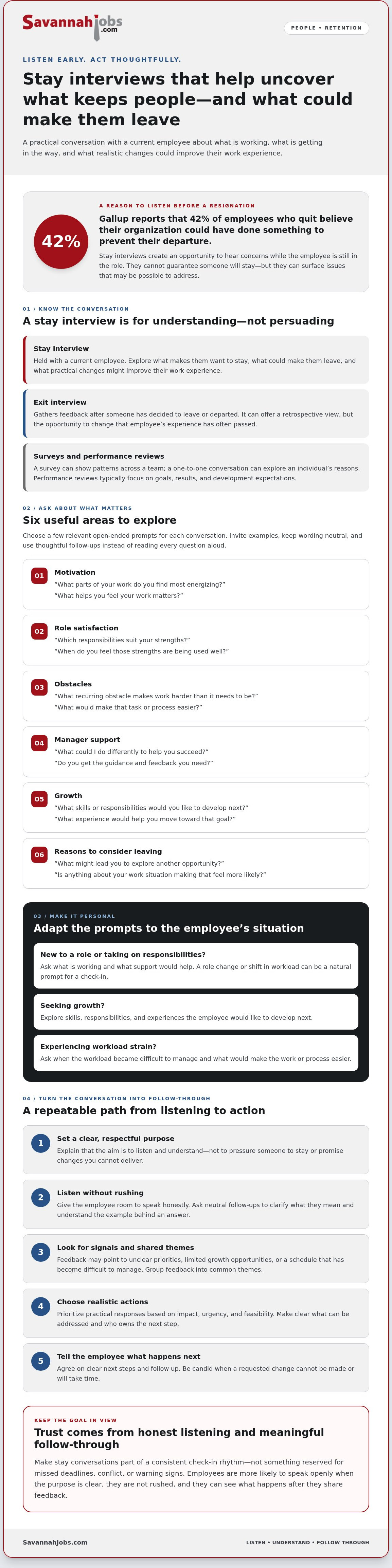
Gallup reports that 42% of employees who quit believe their organization could have done something to prevent their departure. The right stay interview questions to improve retention can help you hear concerns before they become resignation decisions. To get useful answers, employees need to feel safe speaking honestly and see meaningful follow-through.
It’s understandable to worry that direct questions could make a conversation feel like an interrogation. A respectful stay interview is a chance to listen, not to pressure someone to stay or promise changes you can’t deliver. Ask what employees value, what makes their work harder, and what might prompt them to look elsewhere. Their answers can reveal practical ways to strengthen commitment.
This guide offers open-ended questions and a repeatable employer template for using them across roles and managers. Learn how to prepare, guide the conversation, identify preventable turnover risks, and turn feedback into realistic actions with clear ownership. You’ll also find ways to tell employees what happens next, even when you can’t make every requested change.
Key Takeaways
- Use stay interview questions to improve retention by exploring what employees value, what gets in their way, and what could make them consider leaving.
- Choose a few relevant prompts for each conversation, then use thoughtful follow-ups to get beyond surface-level answers.
- Adapt questions to the employee’s situation, whether they’re new to the role, seeking growth, or dealing with workload strain.
- Build trust by explaining the conversation’s purpose, listening without rushing, and agreeing on clear next steps.
- Group feedback into common themes and prioritize practical actions based on impact, urgency, and feasibility.
What Are Stay Interview Questions, and How Can They Improve Retention?
A stay interview is a planned conversation with a current employee about what makes them want to stay, what could make them leave, and what practical changes might improve their work experience. The best stay interview questions to improve retention invite honest answers, not promises of loyalty. A manager’s role is to understand what the employee is saying, identify what can be addressed, and explain what happens next.
A stay interview differs from a performance review, which typically focuses on goals, results, and development expectations. It also differs from an engagement survey. A survey can reveal patterns across a team, while a one-to-one conversation can explore an individual’s reasons and clarify what they mean. Together, these approaches can inform broader employee retention strategies, but neither replaces attentive, ongoing management.
A stay interview can surface useful signals, such as unclear priorities, limited growth opportunities, or a schedule that has become difficult to manage. It can’t guarantee an employee will stay. Some concerns may be outside the employer’s control, and some changes may take time. Be candid about what you can address, who owns the next step, and when you’ll follow up. Don’t treat the conversation as a way to persuade someone to stay at any cost.
How is a stay interview different from an exit interview?
Stay interviews happen while an employee is still in the role, so there may be time to respond to a concern or remove an obstacle. Exit interviews gather feedback after someone has decided to leave or departed. They can offer a valuable retrospective view, but the chance to change that employee’s experience has often passed. Both conversations need a respectful setting and a clear purpose if employees are to speak openly.
When should a manager hold a stay interview?
Make the conversation part of a consistent check-in rhythm rather than waiting for a missed deadline, conflict, or another warning sign. A role change, shift in workload, or career discussion can also be a natural prompt. For example, after a Savannah team member takes on new responsibilities, ask what’s working and what support would help. Choose a schedule managers can maintain, and give employees time to share concerns without rushing.
Build a Stay Interview Question Set Around What Employees Need
A useful question set covers what’s working and what’s getting in the way. Open-ended questions invite employees to share examples instead of answering yes or no. Those details give you something specific to explore, such as which part of a project feels rewarding or when a workload became difficult to manage.
Use these themes to build stay interview questions to improve retention, then choose a manageable subset for each conversation. You don’t need to read every prompt aloud. Ask a follow-up when an answer raises something worth understanding better, and keep your wording neutral so you don’t steer the employee toward a preferred response.
- Motivation: What parts of your work do you find most energizing? What helps you feel your work matters?
- Role satisfaction: Which responsibilities suit your strengths? When do you feel those strengths are being used well?
- Obstacles: What recurring obstacle makes work harder than it needs to be? What would make that task or process easier?
- Manager support: What could I do differently to help you succeed? Do you get the guidance and feedback you need?
- Growth: What skills or responsibilities would you like to develop next? What experience would help you move toward that goal?
- Reasons to consider leaving: What might lead you to explore another opportunity? Is anything about your work situation making that feel more likely?
Questions that reveal what employees value about staying
Start with what the employee appreciates. Ask about energizing work, meaningful responsibilities, helpful relationships, and working conditions that support their commitment. For example, ask, “Which parts of your week would you most want to keep?” If they name a team relationship or task, follow up with, “What makes that experience work well for you?”
Questions that surface frustrations, growth needs, and retention risks
Make room for concerns without asking employees to promise they’ll stay. Try, “What’s one recurring frustration you’d change if you could?” and “What could make another opportunity appealing?” For growth, ask what they’d like to learn or take on. Listen without interrupting, and clarify whether they’re describing a one-time issue or a persistent pattern.
Keep the conversation focused on learning, not defending every decision or offering an instant fix. If a Savannah employee raises a concern, check that you’ve understood it before deciding what’s practical to change. Note the issue, the next step, and who will follow up. If an employee’s departure later creates a vacancy, employers can explore local Savannah job advertising as a separate recruitment step.
Choose the Right Stay Interview Questions for Each Employee
A consistent framework makes stay interviews easier to use across a Savannah team, but every employee’s answers will differ. Start with shared themes, then choose prompts that fit the situation they describe. Don’t assume someone wants a promotion because they’re early in their career, or that a long-tenured employee has stopped looking for new challenges. Ask, listen, and let their response guide the discussion.
Managers can ask the same core questions consistently while adapting follow-ups. This creates a fair basis for conversations without turning them into a rigid script. Use the table as a quick guide, not a checklist to read word for word.
| Employee situation | Starter question | Useful follow-up |
|---|---|---|
| New hire | What has matched your expectations so far, and what still feels unclear? | Which task, process, or responsibility would benefit from more explanation? |
| Experienced contributor | What still feels meaningful in your work, and what has changed over time? | Is there a responsibility or work practice you’d like to keep, change, or revisit? |
| Employee seeking growth | What skill or responsibility would you like to build next? | What kind of project or support would help you get practical experience? |
| Employee facing workload strain | Which part of your workload is hardest to manage right now? | What would a workable improvement look like from your perspective? |
Which questions work best for new hires and established employees?
For a newer employee, focus on expectations, onboarding, and role clarity. If they say a process is confusing, ask where they get stuck and what information would help. With an experienced contributor, explore what remains rewarding and what feels different now. A follow-up can reveal whether responsibilities have shifted in a way that calls for clearer priorities or a conversation about the role.
How should questions change when an employee signals a problem?
Stay calm and ask for specifics without challenging the employee’s account. “Can you share an example?” can clarify what happened, how often it occurs, and how it affects the work. Then ask what a workable change would look like. Don’t promise a fix on the spot. First consider your authority, available resources, and feasibility, then explain how you’ll respond.
These tailored prompts make stay interview questions to improve retention relevant to the person in front of you, without treating a job title or length of service as a substitute for listening.
Run a Stay Interview That Builds Trust and Produces Useful Feedback
A thoughtful process helps employees speak candidly and gives managers a clear way to act on what they hear. Schedule the conversation in a private setting and allow enough time to talk without rushing. Before you begin, decide how notes will be handled and who may need to see feedback to address it. Explain any limits on confidentiality honestly. Don’t promise that no one else will hear the concern or that every request can be fulfilled.
- Prepare. Review the employee’s role and recent changes in responsibilities or workload. Choose a few relevant questions, and plan to listen rather than defend decisions.
- Explain the purpose. Say that you want to understand their experience and identify practical ways to support their work. Describe how their feedback may be used.
- Listen. Give the employee room to finish their thoughts. Avoid interruptions, defensiveness, and immediate rebuttals.
- Summarize. Reflect back the main points and ask whether you’ve understood correctly. Give the employee a chance to clarify or correct your interpretation.
- Agree on actions. Separate steps you can take as a manager from concerns that need wider organizational review. Be clear about what you can explore, not what you can guarantee.
- Check back. Share an update even if the answer is that a requested change isn’t feasible. Silence can undermine trust after an employee has taken the risk of speaking openly.
Every follow-up action should have an owner and a check-in date. Record work-related themes and agreed steps, not unnecessary sensitive personal details. Keep notes discreetly and follow your organization’s policies for handling employee information.
How can managers make employees comfortable speaking honestly?
Open with a plain explanation: “I’d like to hear what’s working for you and what could make your work easier. I’ll use your feedback to consider next steps, and I’ll be clear if I need to involve others.” Then give the employee time to answer. Stay interview questions to improve retention only help if people can answer without feeling pressured to stay or expecting an automatic promise of change.
What should managers document and do after the conversation?
Capture the concern, its impact on work, any agreed action, and who will follow up. Route issues beyond your authority to the appropriate decision-maker, and tell the employee what you can share about the next step. For general legal context, refer to a Savannah employer guide to Georgia at-will employment and consult qualified counsel about a specific situation. This is not legal advice.
If feedback points to a vacancy you need to fill, explore local Savannah job posting options as a separate recruitment step.
Turn Stay Interview Feedback Into Retention Actions for Your Savannah Team
A conversation only helps if its themes inform practical decisions. Group feedback by topic, such as workload, scheduling, recognition, development, management, and role clarity. Look for repeated concerns without assuming one employee’s experience represents everyone. For example, a hospitality manager might hear that shift handoffs are unclear, while a healthcare or manufacturing team member might point to competing priorities. Treat these as examples to investigate, not claims about Savannah workplaces generally.
Prioritize each issue by considering its impact on employees, urgency, feasibility, and whether several people have raised it. A small process clarification may be a quick fix. A scheduling change, budget request, or policy review may need approval and more time. Retention conversations can point to action, but they don’t replace fair pay, sound management, or a healthy workplace.
How can employers prioritize feedback without overpromising?
Be specific about the next step. Tell the employee what will happen, who owns the action, and when they’ll hear back. If you can’t meet a request, explain why plainly and discuss alternatives. For instance, if a requested schedule change isn’t workable, you might review whether another arrangement could address the underlying concern. Don’t promise a result before confirming authority, resources, and feasibility.
A simple action tracker can keep follow-through visible:
- Theme: What work-related issue came up?
- Priority: How urgent and impactful is it, and has it been raised by others?
- Owner and next step: Who will review or address it?
- Check-in: When will the employee receive an update?
How do stay interviews fit into a broader Savannah hiring plan?
Recurring feedback can help employers review role expectations, onboarding, and manager practices. If an employee leaves, use the opening to reassess what the job requires and whether the recruitment message reflects the role accurately. Stay interview questions to improve retention are one part of that work. Consistent communication and realistic follow-through matter just as much.
For Savannah employers, recruitment advertising is a separate step if feedback doesn’t prevent a vacancy. Review your hiring needs and local job-market context as you refine the role and its message. If you’re ready to advertise an open position, explore local Savannah job posting options.
Make Listening Part of Your Retention Practice
Stay interviews work best as an ongoing habit, not a one-time attempt to change someone’s mind. Use stay interview questions to improve retention to learn what employees value, then focus on concerns you can realistically address. Consistent questions help managers spot shared themes, while clear ownership and timely updates show employees their feedback was taken seriously.
Not every request will lead to a change, and no conversation can guarantee someone will stay. You can offer a respectful discussion, an honest response, and a clear next step. That’s a practical foundation for stronger working relationships across your Savannah team.
If a vacancy does arise, reach local job seekers with a 30-day job posting on SavannahJobs.com. Optional featured job and featured employer upgrades provide additional visibility choices. Post a job on SavannahJobs.com when you’re ready to fill an opening. Keep listening, follow through, and take the next step with confidence.
Frequently Asked Questions
What are stay interview questions?
Stay interview questions help managers understand what encourages an employee to remain in their role and what might lead them to consider leaving. They’re asked in a conversation with a current employee, giving the manager a chance to hear about motivation, support, challenges, and future goals. The aim is to learn and identify reasonable next steps, not to pressure someone into staying or promise that every concern can be resolved.
What questions should managers ask in a stay interview?
Ask open-ended questions about what the employee values, what makes work harder, and what they hope to develop. For example, ask, “What parts of your work do you find most energizing?” or “What might make another opportunity appealing?” Choose a few prompts that fit the employee’s experience, then ask for examples when an answer needs more context. These stay interview questions to improve retention should invite honest discussion, not steer employees toward a particular answer.
How often should you conduct stay interviews?
There isn’t one schedule that fits every workplace. Set a consistent rhythm managers can maintain, such as including retention-focused questions in planned one-to-one meetings or dedicated check-ins. You can also revisit the conversation after a meaningful change, such as a shift in responsibilities, workload, or career goals. Avoid contacting employees only when problems become visible. Regular, predictable check-ins help make the discussion part of normal communication across a Savannah team.
Are stay interviews confidential?
Don’t promise absolute confidentiality unless your organization can support that commitment. Before asking for candid feedback, explain who may need to hear it and how the information could be used to review or address a concern. Keep notes focused on work-related themes and agreed actions, and handle them discreetly under your organization’s policies. Being clear about limits helps employees make an informed choice about what they’re comfortable sharing.
Can stay interviews really improve employee retention?
Stay interviews can support retention by helping managers hear concerns while there may still be time to respond. Their value depends on trust, attentive listening, and follow-through. A conversation alone can’t guarantee an employee will stay, and some issues may be outside a manager’s control. Treat the discussion as one part of a broader effort that also includes fair pay, clear expectations, capable management, and a healthy workplace.
What should a manager do after a stay interview?
Summarize the employee’s main concerns, confirm you understood them, and identify a practical next step. Assign an owner and a check-in date, even if the action requires wider review or approval. Tell the employee what you can do, what still needs to be explored, and when they’ll hear back. If a request can’t be met, explain why and discuss feasible alternatives instead of letting the conversation end without an update.
What is the difference between a stay interview and an exit interview?
A stay interview takes place while an employee is still in their role, so feedback may inform changes to the current work experience. An exit interview gathers reflections after an employee has decided to leave or departed. Both can help an employer learn, but their timing creates different opportunities: stay conversations may allow a response before departure, while exit feedback helps identify lessons for future management and hiring in Savannah.


