

What if a more positive workplace depended less on perks and more on what happens during an ordinary shift? For Savannah employers, creating a positive work environment Savannah teams can feel starts with clear expectations, steady communication, and everyday support. Those basics matter whether your employees serve visitors, support healthcare, or keep logistics moving.
Low morale, turnover, and mixed messages from managers can wear down a team. People do better when they feel respected and understand what’s expected. The challenge is making that experience fair across different roles, schedules, and teams, without relying on expensive programs or one-size-fits-all fixes.
This 2026 guide shares practical ways to improve the employee experience and check whether your changes are helping. You’ll learn how to strengthen communication, recognize good work, support wellbeing, and create clearer opportunities to grow. You’ll also find simple measures to help Savannah employers spot what’s working and where to adjust.
Key Takeaways
- See how safety, respect, inclusion, and room to contribute shape employees’ day-to-day experience beyond workplace slogans.
- Use consistent manager habits and clear role expectations to make communication more reliable across your team.
- Compare practical workplace improvements by employee needs and operational effort, with attention to Savannah’s varied industries.
- Try a 30-day approach: gather confidential feedback, choose one priority, make a change, and review what happens.
- Make creating a positive work environment Savannah teams can sustain part of onboarding, regular feedback, and honest job expectations.
What a Positive Work Environment Means for Savannah Employees
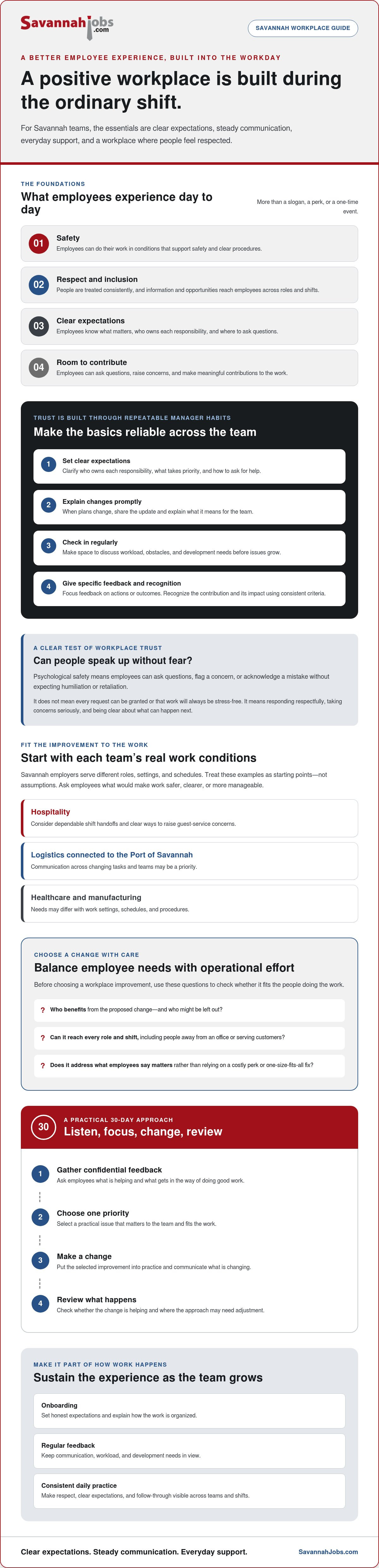
A positive work environment isn’t defined by a slogan on the wall or a one-time staff event. Employees experience it through safe working conditions, respectful treatment, clear expectations, inclusion, and meaningful chances to contribute. These foundations show up in daily interactions, workplace policies, and the way work is organized.
That’s why creating a positive work environment Savannah employees can trust starts with understanding what gets in the way of doing good work. A costly perk may miss the mark if staff need more predictable communication or clearer procedures. The principles of positive psychology in the workplace offer a useful lens for considering how work can support engagement and a sense of value. Start with the conditions your employees say matter.
What employees notice in a supportive workplace
Support is visible in small, repeatable actions. A manager explains how priorities have changed before a shift begins. Team members know who to ask when a task is unclear. Employees are treated consistently, and feedback addresses the work rather than attacking the person.
Psychological safety means employees can ask questions, flag a concern, or admit a mistake without expecting humiliation or retaliation. It doesn’t mean every request can be granted or that disagreements disappear. Employers also can’t promise that work will always be stress-free. They can set clear expectations, respond respectfully, and take concerns seriously.
Why Savannah employers should consider local work realities
Workplace improvements should fit the work itself. A hospitality team may need dependable shift handoffs and clear ways to raise guest-service concerns. In logistics roles connected to the Port of Savannah, communication across changing tasks and teams may be a priority. Healthcare and manufacturing employees may have different needs tied to their work settings, schedules, and procedures. Treat these as starting points, not assumptions. Ask each team what would make work safer, clearer, or more manageable.
Consider who benefits from a proposed change and who might be left out. An office-based update may not reach employees who spend their day on a floor or serving customers. Check that information and opportunities are accessible across roles and shifts. For messaging that reflects what employees actually experience, connect workplace practice with Savannah employer branding guidance. A clear, honest account of expectations helps candidates understand the role before they apply.
How Managers Build Trust, Respect, and Clear Communication
Workplace values become credible through what managers do consistently. If a team is told that questions are welcome, a manager’s response to the first difficult question matters. If fairness is a stated priority, expectations and recognition should not shift depending on who is asking. For employers focused on creating a positive work environment Savannah teams can rely on, trust grows through steady, respectful actions, not statements alone.
Reliability, open communication, respect, and accountability all contribute to stronger workplace connections. UCOR’s guide to strengthening your connections at work offers a useful reminder: trust grows when people follow through and communicate openly.
Make expectations and feedback easier to understand
At the start of work, clarify who owns each responsibility, what takes priority, and how employees should ask questions. When plans change, share the update promptly and explain what it means for the team. Regular individual check-ins give managers and employees time to discuss workload, obstacles, and development needs before small issues become harder to address.
Feedback works best when it’s specific, timely, and focused on actions or outcomes. Instead of labeling someone “careless,” describe the missed step, its effect, and what you expect next time. Recognition should be just as clear. Point to a contribution and its impact, and use consistent criteria so employees can see that appreciation isn’t based on favoritism.
Respond constructively when employees raise concerns
Listen without interrupting. Ask questions to understand what happened, then agree on an appropriate next step. If an employee flags a scheduling conflict or an unclear process, don’t promise an outcome before you know what’s possible. Explain what can change, what can’t, and when you’ll follow up. Handle sensitive details with care and follow applicable workplace policies.
Psychological safety means employees can ask questions, share concerns, and acknowledge mistakes without fear of humiliation or retaliation. It doesn’t require managers to agree with every request. It does require a respectful response and a clear explanation of what happens next.
These habits also shape what prospective employees can expect. If you’re ready to share an opening, describe the role and workplace expectations honestly in a Savannah-area job posting. Clear communication starts before the first day.
Which Workplace Improvements Matter Most for Savannah Teams?
The best improvement is the one that removes a real barrier to doing good work. A schedule perk won’t help employees who need clearer task handoffs, and a new communication app may add friction if a team can’t use it easily during work. A practical approach to creating a positive work environment Savannah employers can sustain starts with asking employees what slows them down, then weighing the likely benefit against the effort required to make a change.
Local industries offer useful context, but not a single prescription. A hospitality team may value predictable schedule updates, while a logistics operation may need reliable communication between teams. Healthcare and manufacturing roles bring their own workflows and conditions. Even within one workplace, priorities can differ by shift, responsibility, and access to managers. Check with the employees affected before choosing a solution.
Match improvements to the work employees actually do
For shift-based teams, review how much notice employees get about schedule changes, how work is handed off, and whether break access and supervisor support are workable in practice. For physically demanding work, raise safety or condition concerns through appropriate channels and involve qualified personnel in assessing them. Office and hybrid teams may benefit more from clearer workload priorities, smoother collaboration, or dependable ways to reach a manager.
Compare employee needs before choosing a perk
Use this simple comparison to start a team discussion. Effort depends on existing policies and operations, so confirm what each change would require in your workplace.
| Improvement | Employee need it may address | Effort and who may benefit |
|---|---|---|
| Flexibility | More workable schedule or task arrangements | May require coordination; prioritize roles where adjustments are practical and fair. |
| Recognition | Clear acknowledgment of useful contributions | Low operational effort when managers use consistent, specific criteria across teams. |
| Communication | Timely updates and accessible answers | Usually a process change; choose channels employees can actually access during work. |
| Development | Chances to build skills or take on new responsibilities | Requires planning and manager time; align opportunities with job duties and employee goals. |
Ask employees which friction points affect their work before allocating resources. A brief check-in can reveal whether the real issue is schedule notice, unclear priorities, or limited access to development. Then consider who benefits, who might be excluded, and how you’ll tell whether the change helped. Don’t assume one perk or communication channel suits everyone.
For broader local context, consult a current Savannah job market outlook and verify any workforce or climate claims against reliable sources before using them to justify a change. Local context can inform your questions; employee feedback should guide the decision.
A Practical 30-Day Plan to Improve Your Savannah Workplace
Turn good intentions into a small, trackable test. A 30-day plan for creating a positive work environment Savannah employees can experience doesn’t need a major program. It needs a clear priority, someone responsible for it, and a way to check whether the change is helping.
Gather feedback and select a manageable priority
Start by asking employees about respect, workload, communication, safety, and barriers to doing good work. Keep questions specific: “Do you know who to contact when priorities change?” is easier to answer than “How’s the culture?” Offer accessible options, such as a short survey, private conversation, or team check-in. Explain who will review the feedback, how it will be used, and what confidentiality you can protect. Don’t promise anonymity if the team’s size or method makes responses identifiable.
Choose one concern employees raise that managers can realistically address. Assign an owner and a timeline. If the feedback points to a safety concern or a policy question, use the appropriate internal process and check Georgia employer compliance guidance or a qualified source before making changes.
Test changes and check whether they help
Use the month to move through four practical steps:
- Days 1 to 7, listen: Collect feedback and note recurring issues. Record a simple baseline, such as how clearly employees rate shift handoffs or how often a particular process problem is reported.
- Days 8 to 14, choose: Select one priority with employee input. Name the person responsible, the action to test, and when the team will review it.
- Days 15 to 23, make a change: Put the adjustment into practice. For example, clarify how schedule updates are shared or introduce a consistent handoff checklist.
- Days 24 to 30, review: Ask whether the change made work clearer or reduced the recurring issue. Compare feedback with the baseline and discuss what to keep, revise, or stop.
Keep the measure simple and relevant. A clarity rating taken before and after the change, or a count of repeated process issues, can help you notice patterns. Small or informal feedback samples can guide discussion, but they don’t prove that one change caused an outcome. Share what you learned with employees, including when results disappoint, then adjust the test.
Keep the focus on the workplace, not promises. If you’re ready to advertise an opening, post a Savannah-area job with clear, honest expectations about the role and working conditions.
Sustain a Positive Work Environment as Your Savannah Team Grows
Workplace improvements last when they become part of how people are hired, welcomed, and managed. As your Savannah team grows, keep checking whether new and existing employees understand expectations and can raise questions. Consistent onboarding, manager habits, and regular feedback help turn a one-time change into a reliable part of the employee experience.
Carry workplace standards through hiring and onboarding
Make job descriptions match the work. Describe actual duties, schedules, reporting relationships, and relevant working conditions so candidates can make an informed decision. Avoid promises that the role or workplace can’t consistently deliver. Clear expectations help candidates understand the opportunity, but they can’t guarantee a hire or retention outcome.
Once someone joins, provide a clear contact for questions, explain training steps, and make space for an early check-in. Ask what’s clear, what still feels uncertain, and whether the day-to-day role matches what was described. As your hiring process evolves, the Savannah local hiring guide can be a useful companion for reviewing how you communicate with applicants.
Share local openings when you’re ready to hire
Keep the employee experience in view when preparing an opening. A clear, honest job advertisement can introduce candidates to the role and the expectations they’ll encounter. That message is most credible when it reflects the workplace employees actually experience, rather than relying on broad claims about culture.
SavannahJobs.com is a self-service local job advertising platform, not a staffing agency. Employers can choose a 30-day job posting and optional Featured Job or Featured Employer upgrades. It’s an option for sharing a Savannah-area opening with local job seekers, but it doesn’t provide staffing services or workplace consulting.
If you’re ready to hire, consider sharing your opening through SavannahJobs.com. Keep the details grounded in the role, and let a clear picture of the work speak for itself.
Keep Building a Better Savannah Workplace
Creating a positive work environment Savannah employees can count on is ongoing work, built through clear expectations, respectful communication, and improvements that match each team’s needs. Listen before choosing a fix, then test one practical change and review employee feedback to see what may need adjusting.
As your team grows, carry those standards into hiring and onboarding. Describe the role and working conditions honestly, make expectations clear to new hires, and keep regular feedback part of how managers work. A credible employee experience can help candidates understand your workplace, without promising a particular hiring outcome.
Frequently Asked Questions
What makes a work environment positive?
A positive work environment supports safety, respect, clear expectations, fair treatment, and employee input. The right practices depend on the work and the people doing it. Ask employees what helps them do their jobs well, then select one practical issue to address. For example, if staff say task priorities are unclear, clarify who sets them and how updates will be shared. Check back to learn whether the change helped.
How can a small business create a positive work environment on a limited budget?
Start with consistent management habits rather than expensive perks. Explain responsibilities, share updates, recognize specific contributions, and make time for questions. Ask employees which everyday obstacle most affects their work, then choose an improvement the business can maintain. That could mean clarifying a handoff or making it easier to reach a supervisor. Review employee feedback afterward to see whether the change addressed the need you heard.
How do you measure whether a workplace is positive?
Use several signals, not a single score. Short, consistent surveys can track employee views on respect, clarity, and support, while conversations add context to responses. You can also monitor relevant workplace measures, such as recurring concerns or retention trends. Explain how you’ll use feedback and protect confidentiality as appropriate. Look for patterns over time, but don’t treat one metric or a small, informal sample as the full picture.
What should Savannah employers consider when improving workplace culture?
Start with the actual roles and working conditions in your organization. Hospitality shift teams, logistics workers, healthcare staff, and office employees may face different challenges, so ask the people doing each job instead of assuming one solution fits all. Creating a positive work environment Savannah teams can rely on means matching changes to their needs. For safety, employment, or regulatory questions, consult current authoritative guidance or a qualified professional.
Can employee feedback improve workplace morale?
Employee feedback can help you understand what’s affecting morale, but asking for input is only the first step. Explain how responses will be reviewed, choose an issue you can address, and report back on the decision. If you can’t meet a request, explain why and consider whether another option is possible. Following through shows employees their input was taken seriously, even when the outcome isn’t exactly what they hoped for.
What should an employer do first to improve a negative work environment?
Identify the most urgent concern and respond through the appropriate workplace process, especially if it involves safety, discrimination, or serious misconduct. Seek qualified guidance when needed. For broader morale concerns, invite specific feedback, select one manageable priority, and assign someone to take responsibility. Set a date to review progress with employees. Clear follow-up helps keep the response practical and shows the team what action was taken.
Ready to hire in Savannah? Post your opening on SavannahJobs.com, with clear details about the role and working conditions.


