

The best questions to ask references go beyond confirming a candidate’s job title and dates. Ask how they worked together, what the candidate contributed, and how they handled teamwork, deadlines, and feedback. When relevant former supervisors are available, contacting at least two can add useful perspective. Tie every question to the role you’re filling.
A reference call can help verify details from an application and interview, and offer insight into what it may be like to work with the candidate. Ask clear, practical questions and invite specific examples rather than relying on broad praise or a yes-or-no answer.
This guide explains how to establish a reference’s relationship with the candidate, assess work style and team fit, and approach outreach to a current supervisor thoughtfully. It also covers closing questions that can clarify an incomplete answer or point you to another relevant reference.
Key Takeaways
- Use reference checks to compare a candidate’s account of their experience with practical details about their role and responsibilities.
- Ask how the reference worked with the candidate, including the company and length of their working relationship.
- Explore how the candidate handles teamwork, deadlines, stress, and feedback with questions that invite specific examples.
- Respect a confidential job search by getting permission before outreach and discussing alternatives to contacting a current supervisor.
- Close by clarifying incomplete answers and asking whether another relevant person can offer a useful perspective.
1. What Is A Reference Check?
A reference check is a hiring conversation that helps verify a candidate’s employment history and understand their past work. Compare the reference’s account with the candidate’s application and interview, particularly if job titles or responsibilities differ. For example, a candidate may describe leading a project, while a former manager can clarify their specific role.
Start with verifiable details. Ask the reference to confirm the candidate’s job title, employment dates, main responsibilities, and reason for leaving. These answers can show whether the work history matches what the candidate shared during hiring. If an answer is incomplete, ask a focused follow-up, such as, “Which responsibilities did they handle independently?”
Ask directly about rehire eligibility, but consider the answer in context. Try, “Would you rehire this candidate for a similar role?” If the reference hesitates or says no, ask what informs their view. Their response could relate to performance, the circumstances of the candidate’s departure, or another factor. Don’t treat a brief answer as a complete explanation.
- “What were the candidate’s employment dates and job title?”
- “What responsibilities did they handle most often?”
- “Why did the candidate leave the role?”
- “Would you rehire them, and what is the main reason for your answer?”
These are among the best questions to ask references because they connect employment details with a former manager’s perspective. Keep the discussion focused on the role you’re filling. For example, if the new position involves coordinating daily work, ask whether the candidate had similar responsibilities and how they handled them.
What questions should you ask a personal reference? Ask how they know the candidate, which work-related strengths they have personally observed, and for a specific example. A personal reference can describe qualities they’ve seen, while a former supervisor is better placed to verify employment dates, job duties, and rehire eligibility.
Separate confirmation from recommendation. A reference may verify a candidate’s title and dates without being able to assess their fit for your opening. Explain the role’s core responsibilities before asking whether the candidate could perform them well. This gives the reference a clear basis for answering instead of inviting a general endorsement.
Keep a consistent record of each conversation. Note the reference’s relationship to the candidate, confirmed employment details, response about rehiring, and any needed follow-up. If two accounts differ, ask the candidate to clarify the specific discrepancy. This keeps your decision grounded in relevant details rather than one unexplained comment.
2. Establishing the reference’s relationship to the candidate
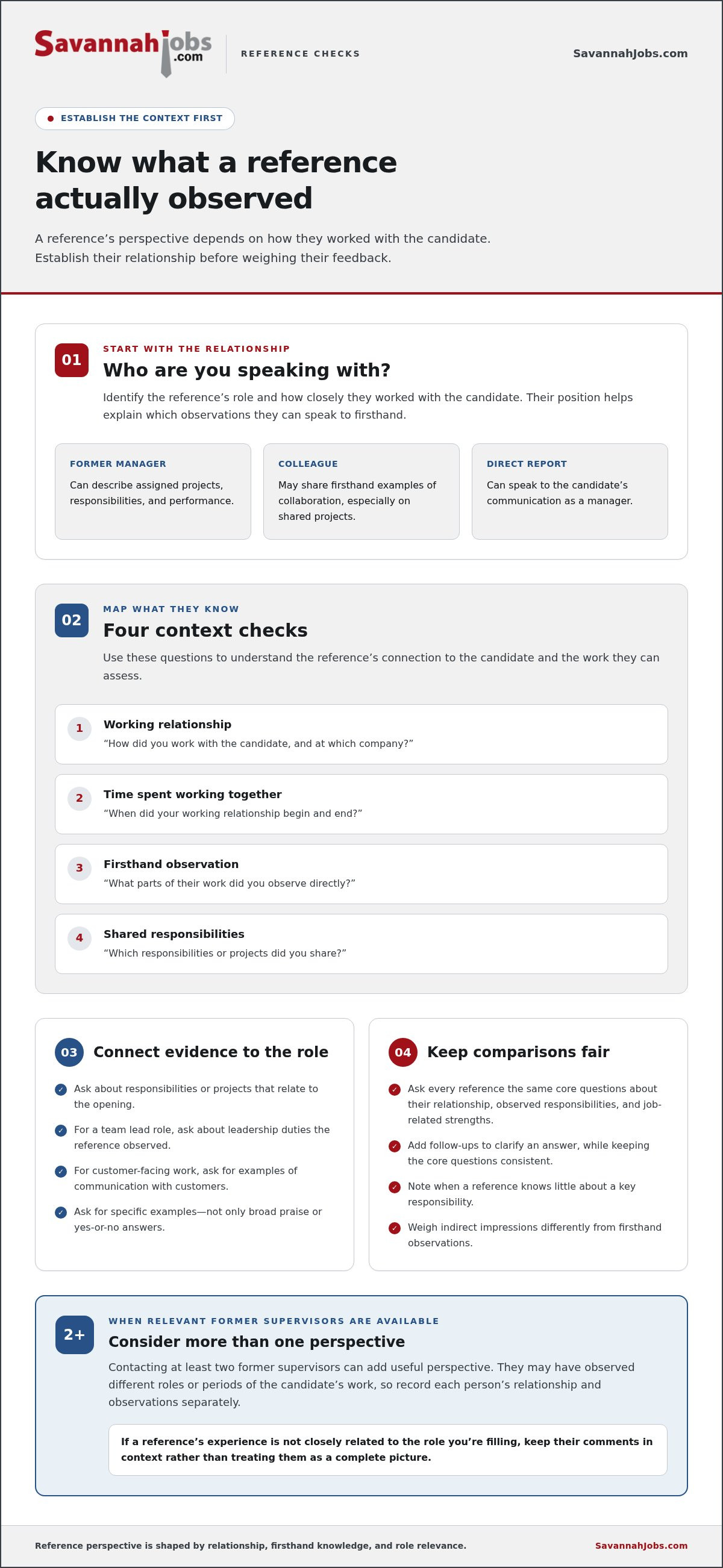
A reference’s perspective depends on how closely they worked with the candidate. A former manager who assigned projects can describe responsibilities and performance, while a colleague may share firsthand examples of collaboration. A direct report can speak to the candidate’s communication as a manager. Identify the reference’s role before weighing their observations.
What are the best questions to ask a professional job reference? Ask how they worked with the candidate, at which company, and for how long. Then ask what the candidate was responsible for and which aspects of their work the reference observed directly.
Use the start of the call to establish context, not to invite a general endorsement. Ask, “What was your role when you worked with the candidate?” and “Did you supervise their work or collaborate as peers?” If they were a manager, ask whether they reviewed the candidate’s work regularly. If they were colleagues, clarify whether they shared projects or worked on separate teams.
The time spent working together helps show how much a reference knows about the candidate. Ask when the working relationship began and ended, and whether it involved a relevant role or project. A manager who supervised the candidate in a different kind of work may still have useful observations, but weigh those comments against the needs of your opening.
Ask every candidate’s references the same core questions about their relationship, the responsibilities they observed, and the candidate’s job-related strengths. Add follow-ups when an answer needs clarification, but don’t change the core questions based on personal impressions. A consistent approach makes it easier to compare references fairly and keep the conversation focused on the position.
Choose questions that relate to the work. For a team lead role, ask what leadership duties the reference observed. For a customer-facing position, ask for examples of the candidate’s communication with customers. Avoid questions unrelated to job responsibilities. The reference’s relationship with the candidate can help you identify relevant firsthand examples.
- “How did you work with the candidate, and at which company?”
- “How long did you work together?”
- “What parts of their work did you observe directly?”
- “Which responsibilities or projects did you share?”
Consider contacting at least two former supervisors when they’re relevant to the candidate’s work history. Their perspectives may cover different roles or periods, so record each person’s relationship and observations separately. If a reference knows little about a key responsibility, note that limitation rather than treating an indirect impression as firsthand experience.
The best questions to ask references pair the same job-related core questions with follow-ups suited to each person’s perspective. A supervisor and a colleague may speak to different parts of the picture. Distinguishing their roles helps you interpret their comments carefully and identify details that need clarification.
3. Evaluating work style and teamwork
Ask for examples of how the candidate worked with others, rather than simply asking whether they were a “team player.” A former colleague might describe how the candidate organized a shared project, while a supervisor could explain how they managed competing deadlines. These details help you assess whether the candidate’s working habits suit the responsibilities of your opening.
What questions reveal a candidate's strengths and weaknesses? Ask which work habits helped them perform well, where they needed to improve, and what example supports each answer. Follow up on broad descriptions, such as “perfectionist,” by asking how that behavior affected a project or team.
Explain the role before asking whether the candidate could succeed in it. If the position involves independent assignments, ask whether they worked effectively without close direction. For a collaborative role, ask how they shared information, coordinated responsibilities, and helped resolve disagreements. The reference can then respond in light of the job’s actual demands.
Useful questions explore specific workplace situations:
- “Did the candidate work best independently or with a team? What did you observe?”
- “What role did they usually take in group projects, such as organizer, planner, or leader?”
- “How did they handle a tight deadline or a change in priorities?”
- “Can you describe a time they resolved conflict with a colleague?”
- “How did they respond to feedback or constructive criticism?”
Listen for behavior and context. If a reference says the candidate “handled pressure well,” ask what happened, what the candidate did, and how it affected the team. A project deadline, for example, may show whether they communicated delays early or coordinated a workable plan with colleagues.
Team fit doesn’t mean hiring someone who works exactly like the existing group. Compare the candidate’s observed strengths with the role’s needs. Someone who prefers independent work may still collaborate effectively when responsibilities are clear. A person who often organizes group tasks may suit a project role that requires coordination, even if they aren’t the team’s formal manager.
Feedback can show how someone learns. Ask what the candidate did after receiving a specific suggestion and whether their approach changed. If the reference offers a vague weakness, ask for a work-related example and what support helped. This gives you context for distinguishing a development area from a general label and planning onboarding.
Record the example, the candidate’s observed action, and its relevance to the role. One account of a difficult deadline shouldn’t define someone’s entire work style. Compare it with other job-related observations, then assess whether the candidate’s approach can meet the position’s practical demands.
4. Getting permission before contacting a current supervisor
Get the candidate’s permission before contacting any reference, especially their current supervisor. A job search may be confidential, and an unexpected call could alert their employer before they’re ready. Explain whom you plan to contact and which work-related topics you’ll discuss. This gives the candidate a chance to raise concerns or suggest another reference.
If the candidate says their search is confidential, don’t contact their current boss. Skip that call or, with the candidate’s agreement, speak with another current colleague. Ask them to suggest someone who has observed relevant work, such as a project partner who collaborated on a recent assignment.
Set expectations before making contact. Tell the candidate you’ll focus on job-related responsibilities, work habits, and fit for the opening. You might ask, “May I contact your former supervisor at your previous employer? I’d like to discuss your role and the responsibilities relevant to this position.” Record the candidate’s response and any limits they mention.
Former supervisors can offer useful perspective without involving a current employer. Consider contacting at least two former supervisors when their experience covers a relevant period. They may describe how the candidate’s approach changed across roles or whether a strength appeared in more than one setting. Keep each person’s observations tied to the role they supervised.
Ask questions that distinguish independent work from work requiring supervision. For example, “Which assignments did the candidate manage without close direction?” and “When did they need guidance from a manager?” A supervisor can describe the expectations they set and support they provided. This context helps you assess whether the candidate’s work style suits a role with frequent check-ins or greater autonomy.
If the candidate has managed people, ask about their leadership. A former direct report may describe how the candidate assigned work, set expectations, and responded when a deadline slipped. A manager who supervised the candidate can explain how they handled accountability and feedback. These perspectives differ, so note what each person observed firsthand.
Keep outreach focused and orderly:
- Ask the candidate’s permission before contacting references.
- Respect a confidential search by skipping the current boss or discussing another current colleague.
- Choose former supervisors with relevant knowledge of the candidate’s work.
- Explain the role, then ask questions about responsibilities and observed behavior.
If the opening requires independent project ownership, ask a former supervisor for a specific example of the candidate planning and completing work. If the role involves managing staff, ask what leadership actions the reference personally observed. Seeking permission before outreach protects the candidate’s job search while helping you gather focused, role-relevant information.
5. Closing questions and additional references
Close a reference check by resolving gaps, not by asking for general praise. Before ending the call, summarize the key points and invite corrections. If the reference described project coordination but didn’t explain the candidate’s role, ask what the candidate personally handled. A focused final question can clarify what earlier answers left uncertain.
How many references should employers contact, and in what order? Contact at least two former supervisors when their experience covers a relevant period. Start with the supervisor whose experience best matches the role, then speak with the second. Ask the candidate’s permission before contacting any reference.
Give each reference a clear opportunity to add useful context. Ask, “Is there anything about the candidate’s job-related work that I haven’t asked about?” Then invite them to suggest someone else who directly observed relevant work. A suggested contact may offer a fresh perspective, but first establish their relationship to the candidate and get permission before reaching out.
If a reference can’t verify employment dates or responsibilities, separate those facts from opinions about performance. You can usually contact the past employer’s main line or human resources department to confirm tenure or job duties. Keep the follow-up specific: identify the candidate and the employment detail you need clarified.
Use closing questions to explore unclear answers without steering the reference toward a particular response. If they say the candidate struggled with deadlines, ask for an example and what the candidate did afterward. If they give a short answer about rehire, ask what informed their view. Record the response and any limits on what they observed directly.
- “Which responsibilities did you personally observe?”
- “Can you give an example that explains your assessment?”
- “Is there another person who worked closely with the candidate?”
- “Is there a job-related point I should clarify before we finish?”
After the call, compare the reference’s account with the candidate’s application and interview. Record confirmed details, unresolved gaps, and follow-up steps separately. If two references describe different responsibilities, check whether they supervised different projects or periods. That may explain the difference and help you weigh each comment fairly.
Once your hiring criteria are clear, promote your open role to Savannah-area candidates and continue building a focused applicant pool.
SavannahJobs.com: 30-Day Job Posting
SavannahJobs.com helps employers advertise open positions to the local Savannah workforce through a 30-Day Job Posting. After defining the role and reference-check process, use a listing to reach candidates for your next opening. A Featured Job Upgrade can add visibility to a specific vacancy, while a Featured Employer Upgrade can highlight your organization to job seekers considering local opportunities.
Choose an option that suits your hiring needs: advertise an open role or increase your employer profile’s visibility while recruiting. A clear job description helps candidates understand the responsibilities before applying, giving you a stronger starting point for screening and reference conversations.
Visit SavannahJobs.com to post your open role.
Make Your Next Hiring Decision With Purpose
Make reference checks a consistent part of how you define success in each role. Before opening a search, identify the work habits and team contributions that matter most. This gives your hiring team a clear basis for evaluating candidates and discussing what support a new employee may need.
The best questions to ask references are most useful when they connect observed behavior to the work ahead. Keep that connection in mind as you assess applicants, then give strong candidates a clear picture of the opportunity and your organization.
For Savannah-area hiring, SavannahJobs.com offers a 30-Day Job Posting, plus Featured Job Upgrade and Featured Employer Upgrade options. Choose the posting approach that fits your opening and recruiting goals.
Contact SavannahJobs.com today to promote your next opportunity. Take the next step with a thoughtful hiring process and a clear local job listing.
Frequently Asked Questions
What Is A Reference Check?
A reference check is a job-related conversation that helps an employer assess information about a candidate through someone familiar with their work. Its value comes from separating confirmed facts from personal impressions. For example, a former manager may verify a project role, while a colleague may describe the candidate’s contributions. Use the conversation to clarify relevant details, not to replace interviews or make a decision based on one comment alone.
How do you verify a reference's relationship to a job candidate?
Ask the reference to identify their position, employer, and working relationship with the candidate, then compare those details with the candidate’s reference information. For example, clarify whether a named supervisor directly managed the candidate or simply worked at the same company. If a reference can’t verify employment or responsibilities, contacting a former employer may help clarify those details.
What questions should you ask about a candidate's work performance and reliability?
Ask for specific examples of how the candidate met commitments, communicated delays, and completed core duties. For example, “Tell me about a project they owned from planning through delivery” can show how they organized work and handled obstacles. Follow up by asking what the reference observed personally and what happened as a result. Keep questions tied to the position, such as customer response, accurate records, or coordinating handoffs.
What questions are illegal or inappropriate to ask a job reference in the United States?
Keep reference questions focused on job-related qualifications, and don’t ask about medically related absences. Questions about personal matters unrelated to the role can also introduce bias into hiring. Applicable local, state, and federal rules matter, so use a consistent, job-focused question set and familiarize yourself with the requirements for your hiring process. For example, ask about attendance expectations only in a role-relevant way, not about medical reasons for an absence.
How do you ask a reference about a candidate's reason for leaving and rehire eligibility?
Use neutral wording: “What led to the candidate’s departure?” and “Would you rehire them for a suitable role?” If the reference hesitates, ask what informs their answer and whether the concern relates to performance or circumstances around the departure. Compare the explanation with the candidate’s account. A rehire response is one piece of context, so record the reason rather than treating yes or no as a complete assessment.


