

Bias can shape a salary conversation before anyone names a number. When negotiating salary with candidates in Savannah, set a defensible pay range for the role, explain it early, and weigh the candidate’s experience and location against comparable positions. Keep the discussion professional, listen to what matters to the candidate, and put agreed terms in writing.
It’s easy to focus on the final figure, but a fair, clear process matters too. Employers and candidates benefit when expectations are discussed openly and compensation decisions rest on role-related factors rather than assumptions. This guide covers how to prepare, discuss pay ranges early in the interview process, and consider incentives when base pay is fixed. It also explains how to recognize bias, helping Savannah employers make consistent offers and candidates discuss their value with confidence.
Key Takeaways
- Build an offer around comparable roles, the candidate’s experience, and Savannah-area context, then explain how you arrived at the proposed range.
- If base pay is fixed, consider whether a signing bonus or performance-based incentive could make the overall offer more responsive to the candidate’s priorities.
- Bring compensation expectations into the first interview with a clear range, and be direct about any limits or flexibility.
- Use consistent, role-related criteria when assessing candidates so assumptions don’t skew pay discussions or offers.
1. How To Negotiate Salary With A Candidate?
For employers negotiating salary with candidates in Savannah, local labor demand and talent shortages can strengthen candidates’ bargaining position. Hiring teams can respond by setting a defensible salary range, explaining its limits, and assessing relevant skills in light of current market conditions.
Start with the role, not the candidate’s previous salary. Research current industry benchmarks using sources such as Glassdoor and conversations with industry professionals or recruiters. Compare roles with similar responsibilities, required skills, and seniority. Online salary data is a starting point, not a final answer: nonprofit and for-profit employers, for example, may face different compensation circumstances.
Next, check company salary standards. Set the position’s minimum and maximum before advertising, then review internal pay structures for comparable jobs and employees. Consider the candidate’s experience and location alongside those ranges. This preparation helps keep offers consistent and makes it easier to explain why a proposed figure fits the role.
Use Savannah-area market information to test whether your range can attract the talent you need. Compare similar roles by industry, scope, experience, and location. A market figure that ignores those details may mislead. Set a local range that reflects the specific work and your organization’s compensation structure.
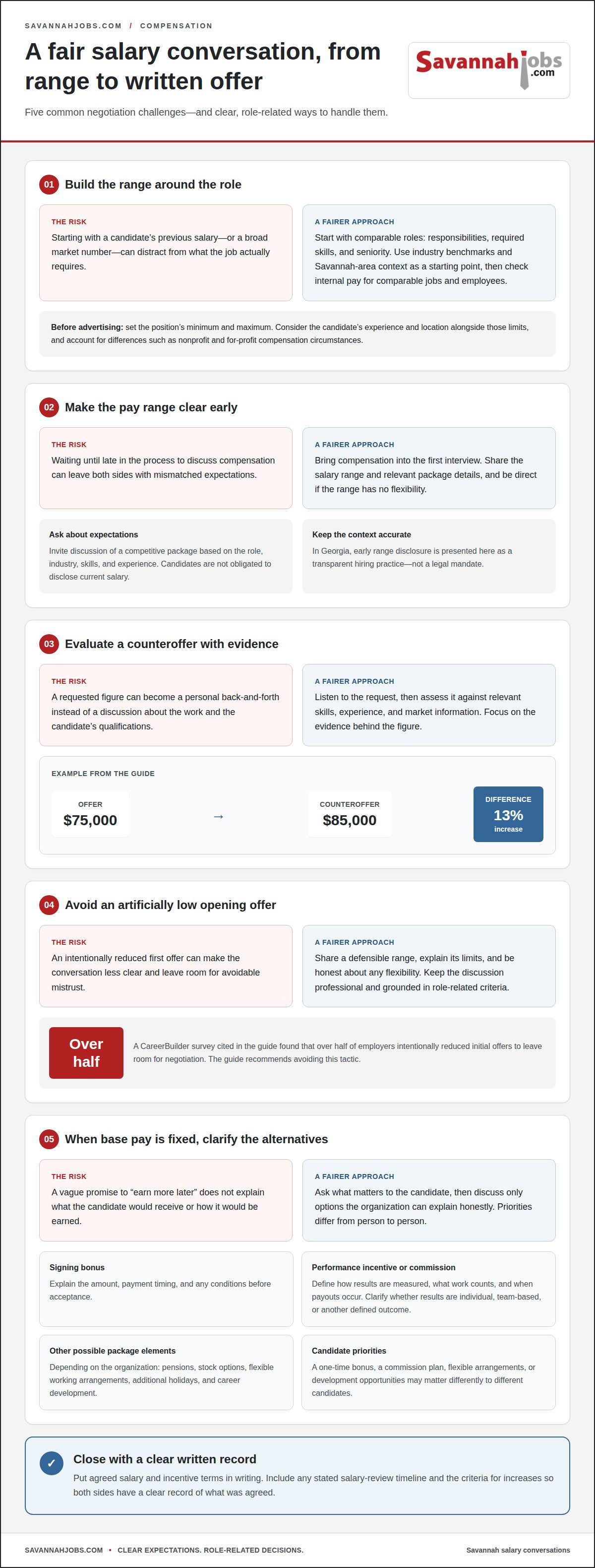
A consistent approach to negotiating salary with candidates in Savannah also means keeping the conversation open. Ask which parts of compensation and work arrangements matter most, listen to concerns, and show appreciation for the candidate’s expertise. If a candidate counters, discuss the requested figure against their skills, experience, and relevant market information. For example, a $75,000 offer followed by an $85,000 counteroffer represents a 13% increase. Focus on the evidence behind the request, not personal expenses alone.
A CareerBuilder survey found that over half of employers intentionally reduced initial offers to leave room for negotiation. Avoid an artificially low offer as a tactic. Share a clear range and explain any flexibility. Confirm agreed salary terms in writing, including any stated salary-review timeline and criteria for increases. This gives both sides a clear record and helps prevent misunderstandings.
2. Offering bonuses, commissions, and signing bonuses
When base pay is limited, Savannah employers can consider a signing bonus or performance-based incentives. Depending on the organization’s compensation structure, other negotiable elements may include commissions, pensions, stock options, flexible working arrangements, additional holidays, and career development opportunities.
Start by asking which parts of the package matter most to the candidate. One person may value a one-time signing bonus, while another may prefer a commission plan tied to sales or a clear path to develop new skills. Discuss options you can explain honestly, rather than presenting uncertain possibilities as guaranteed compensation.
A signing bonus can address a candidate’s immediate priorities when the base salary cannot move. Explain the amount, payment timing, and any conditions before the candidate accepts, then put the agreed terms in writing. For performance-based incentives, describe how results are measured, which work counts, and when payouts occur. A vague promise to “earn more later” gives neither side a clear picture.
Commissions need particular clarity. Explain whether the plan rewards individual sales, team outcomes, or another defined result. Tie the incentive to work the employee can influence, and discuss how the plan fits the role’s daily responsibilities. Candidates should understand what successful performance means before weighing the offer.
Pensions and stock options can be part of a broader compensation discussion when an employer offers them. Explain eligibility, timing, and key terms in plain language. Don’t treat a benefit as interchangeable with salary without discussing how it works. Flexible schedules, additional holidays, or professional development may matter more to a candidate than a higher variable payment. The right counteroffer depends on the situation and the candidate’s priorities.
For Savannah employers still building a candidate pipeline, local employer visibility can support recruitment while you shape a clear offer.
3. Discussing pay ranges during the first interview
Bring compensation into the first interview, before both sides invest more time. For Savannah hiring, share the salary range and relevant package details at the outset. If the range has no flexibility, say so directly. Candidates can ask about an unposted range during that first conversation.
In Georgia, treat early range disclosure as a transparent hiring practice, not a legal mandate. Keep the discussion focused on the role, your organization’s range, and the complete package.
Ask about expectations without requiring candidates to disclose current salary. They aren’t obligated to share it. If you ask what they’re seeking early in the process, invite them to discuss a competitive package based on the industry, skills, and experience, rather than pressing for one figure before explaining the role.
Use real examples to clarify limits.
Be prepared to explain how the range relates to responsibilities and experience. Don’t suggest a higher salary is possible if your organization cannot support it. If there’s room to grow, describe the relevant skills, performance criteria, and review process. For example, explain what development could lead to higher compensation in an employee’s second year, without presenting advancement as automatic.
Some professionals expect at least a 10% pay increase when moving to a new role. Treat that expectation as a conversation starter, not a substitute for discussing the position’s range and the candidate’s priorities. Flexible arrangements, additional holidays, or career development may matter more to someone than a higher starting salary. A clear first interview helps both sides decide whether the workplace and compensation package align.
4. Recognizing bias in salary negotiations
Salary discussions can reward confidence instead of role-related qualifications. A reported comparison found that 57% of men negotiated the salary of their first job, compared with 7% of women. These figures describe first-job negotiations, not Savannah applicants specifically. They still show why hiring managers shouldn’t treat a candidate’s willingness to negotiate as evidence of greater skill or value.
Avoid using a candidate’s previous salary to anchor a new offer. Candidates aren’t obligated to disclose it, and past pay may reflect an earlier employer’s decisions rather than the value of this position. Compare applicants against the same role-related criteria, such as relevant experience, responsibilities, and demonstrated skills. Record the reasons behind each offer so the decision is explainable.
In Savannah, use a consistent process for every candidate. Set the position’s range upfront, identify which qualifications support movement within it, and apply those criteria across interviews. For example, if two candidates bring comparable experience, don’t offer different starting pay simply because one negotiates confidently and the other accepts the first figure.
Review incentives and flexibility with the same care. If one candidate receives a signing bonus or different work arrangements, document the job-related reason. Hiring managers should also avoid threats, pressure, or artificial deadlines during a counteroffer discussion. Give candidates space to raise concerns, and respond to the substance of their request.
Before closing an offer, compare it with other offers for the same position. Check whether differences reflect documented skills, experience, or responsibilities, rather than assumptions about who will accept less. Keep written records of the range, criteria, discussion, and final terms. These records support consistent decisions and help identify patterns that could otherwise go unnoticed.
SavannahJobs.com
SavannahJobs.com helps Savannah employers advertise open positions to the local workforce. Use a 30-Day Job Posting to put a vacancy in front of local job seekers, then consider a Featured Job Upgrade or Featured Employer Upgrade when additional visibility fits your recruitment goals. A stronger candidate pipeline can support a clearer hiring process, giving your team more opportunity to discuss the role and its compensation with interested applicants.
These advertising options are a practical next step when you’re ready to recruit for a position and put your salary range and offer details into practice. Contact SavannahJobs.com to discuss advertising your open role.
Make Your Next Hiring Conversation More Consistent
For employers negotiating salaries with candidates in Savannah, the next step is to turn thoughtful conversations into a repeatable hiring practice. Give hiring managers a shared way to explain how role requirements, candidate experience, and compensation decisions connect. Consistency helps candidates understand the offer and your team approach each discussion with purpose.
Put that approach to work on your next vacancy. A clear recruitment message gives applicants a better starting point for understanding the position and its compensation. Keep the conversation open, stay grounded in job-related factors, and make each candidate feel heard.
When you’re ready to reach local job seekers with your open role, contact SavannahJobs.com today. Build a more considered hiring process, one conversation at a time.
Frequently Asked Questions
How To Negotiate Salary With A Candidate?
Keep the discussion collaborative: clarify the candidate’s priorities, consider their counteroffer, and explain how your response fits the role. If the requested base pay is outside your limit, consider whether another part of the offer could address the gap. A candidate focused on schedule flexibility, for example, may value a different arrangement more than a salary change. Confirm the final terms in writing.
What is Savannah’s cost of living, and how should it affect salary offers?
Savannah’s cost of living is one factor to consider, but it shouldn’t set a salary by itself. Weigh the position’s responsibilities, relevant local market information, the candidate’s experience, and your organization’s internal pay structure. Cost pressures may help explain a candidate’s priorities, but salary should remain tied to the work and consistent criteria. Consider the full compensation package when discussing trade-offs.
How should employers set a salary range before negotiating with a candidate?
Set a range by defining the role’s responsibilities, required skills, and experience level, then align those expectations with your organization’s budget and internal pay structure. Decide which qualifications support placement toward the higher end before interviews begin. Keep the range consistent in its unit, such as hourly or annual pay, and ensure everyone involved in hiring can explain its boundaries clearly.
What are effective steps for negotiating salary with a job candidate?
After presenting an offer, invite the candidate to respond and listen without interrupting. Restate the request to confirm you understand it, then assess the role-related reasons behind it. Decide whether you can adjust salary, another offer element, or neither. Give the candidate a clear response, explain any next steps, and record the agreed terms so the written offer reflects the discussion.


