

A hiring process can lose a strong applicant before the interview even begins. Improving candidate experience in Savannah means making every step clear, timely, and respectful, from the job application to the final decision. Candidates notice how easy it is to apply, whether expectations are clear, and whether the employer keeps them informed.
It’s easy to focus on filling a role and overlook what applicants experience along the way. Long pauses, complicated applications, or unclear next steps can leave interested candidates unsure whether to continue. This article explains what candidate experience includes, where delays and unclear expectations arise, and why promising applicants may withdraw even when a role interests them. It also covers practical ways to track progress through candidate feedback and hiring-process measures, so your team can identify what works and where to make changes. Clear communication creates a more considered process for candidates and helps your team spot friction before it becomes a pattern.
Key Takeaways
- Use automation for application confirmations, stage updates, interview logistics, and common questions while keeping messages personal where possible.
- Map each hiring stage, assign an owner to the next action, and explain to applicants what happens next and when they can expect an update.
- Prepare consistent interview questions and structure each conversation to avoid repetition and respect candidates’ time.
- Gather feedback from candidates at key points, then compare responses and process outcomes over time to identify what needs to change.
1. What Is Candidate Experience?
Candidate experience covers how applicants feel throughout recruitment, from finding a role to receiving a final decision. In Savannah, Georgia, a good experience means a clear application, realistic role details, timely updates, and respectful interviews. For example, explain each hiring stage before asking applicants to submit materials. Improving candidate experience in Savannah starts with making the process predictable and treating every applicant as an individual.
Automation can make communication consistent and keep candidates informed. Set up an application confirmation, a status update after each stage, and a closing message once the decision is final. Provide a named recruiter’s email for personal questions, even when automated systems send routine notices. If recruitment process outsourcing supports your hiring team, agree on one central communication owner and shared message templates. Candidates then receive consistent information instead of conflicting updates from different contacts.
Which recruiting platforms and local job boards are effective in Savannah? Choose channels based on the role, the applicants you need to reach, and how clearly each listing explains responsibilities and qualifications. A local job board can put an opening in front of Savannah-area job seekers, while other recruitment platforms may reach different audiences. A good candidate experience continues after the application: explain what happens next, who will be in touch, and when applicants should expect an update.
What are the costs of improving recruitment and candidate experience for Savannah businesses? Costs depend on staff time, software, advertising, and whether an organization uses outsourced coordination; advertising quotes depend on campaign scope and are provided after a quote request. Local factors also shape the process. In Savannah, role schedules, commute expectations, and competition for particular skills can affect how quickly candidates respond and what information they need before applying.
Personalize communication across email, phone, and interview conversations. Use the applicant’s name and refer to the specific role instead of sending a generic message. During a notice period, share next steps and answer practical questions. After acceptance, provide first-day details such as where to report and whom to meet. These concrete updates help candidates move from offer to onboarding with fewer unanswered questions.
2. Identifying delays and unclear expectations in the hiring process
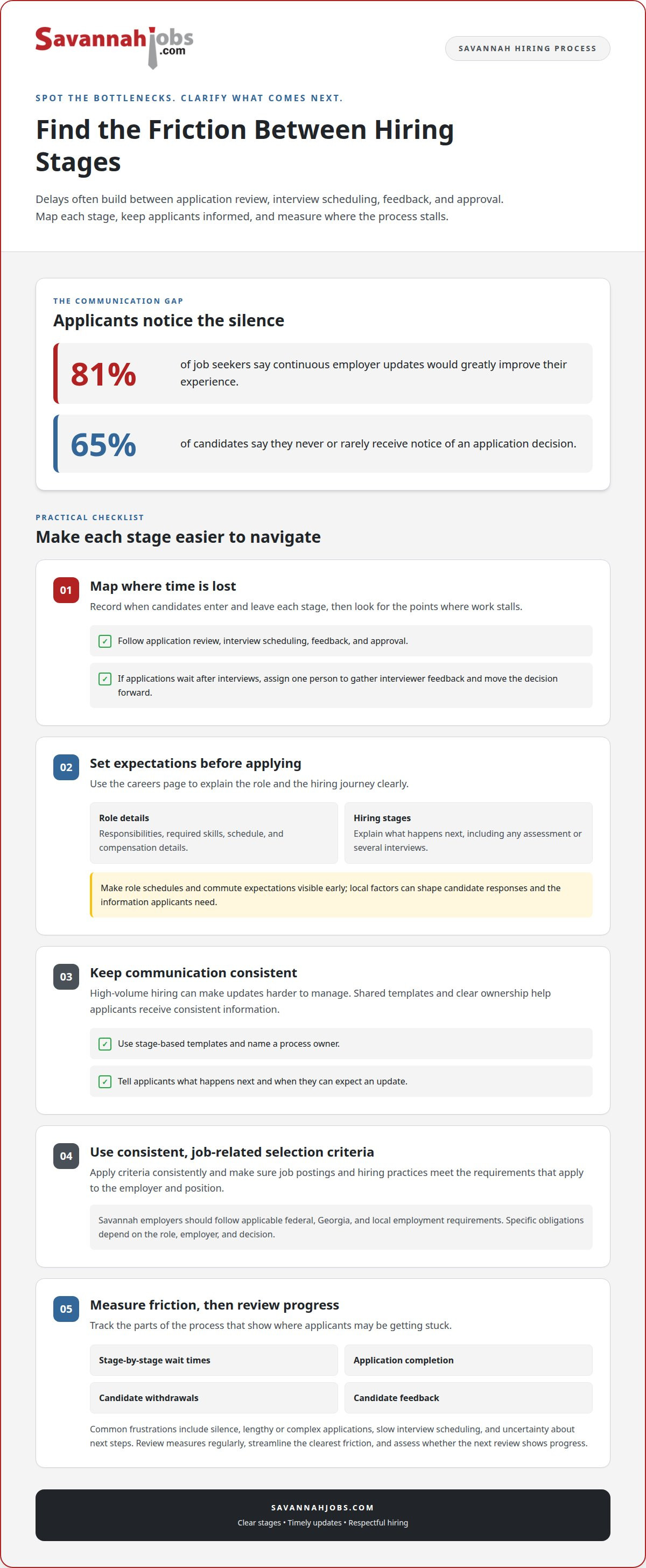
Hiring delays often arise between application review, interview scheduling, feedback, and approval. Map each stage and record when candidates enter and leave it, then identify where work stalls. If applications wait after interviews, for example, assign one person to gather interviewer feedback and move the decision forward. This helps reveal whether the bottleneck is scheduling, unclear ownership, or competing priorities.
Careers-page content shapes an applicant’s first impression before the application begins. Clearly state the role’s responsibilities, required skills, schedule, compensation details, and hiring stages. If the process includes an assessment or several interviews, explain that upfront. Candidates researching an organization also look for information about the interview process, so a concise careers page can set expectations before questions turn into delays.
Problems can continue at every point in the hiring journey. 81% of job seekers say continuous employer updates would greatly improve their experience, while 65% of candidates say they never or rarely receive notice of an application decision. High-volume hiring makes consistent communication harder, but stage-based templates and a named process owner help teams keep applicants informed without sending conflicting messages.
Savannah employers should follow applicable federal, Georgia, and local employment requirements throughout recruitment. Use consistent, job-related selection criteria, and ensure job postings and hiring practices meet the rules that apply to the employer and position. Specific legal obligations depend on the role, employer, and decision being made.
Common candidate frustrations include silence, lengthy or complex applications, slow interview scheduling, and uncertainty about next steps. Measure stage-by-stage wait times, application completion, withdrawals, and candidate feedback. Review those measures regularly, then streamline the stage with the clearest friction and assess whether the next review shows progress. In Savannah, role requirements, work schedules, and commute expectations can shape candidate responses; make those details visible early. Employers seeking to strengthen their local profile can consider the Featured Employer Upgrade as part of their recruitment advertising.
3. Why Great Candidates Walk Away From Roles They Want
A strong applicant may lose interest when interviews feel disorganized or dismissive. 51% of candidates would withdraw because of an interviewer’s attitude or behavior. Another 46% of candidates who withdraw say their time felt disrespected during interviews. Those experiences can outweigh genuine interest in the role and other opportunities the employer offers.
Define the hiring decision before designing the interview. List the skills the role requires, the evidence that demonstrates each skill, and who makes the final decision. Then prepare consistent, job-related questions for every candidate. A shared evaluation rubric helps interviewers compare relevant evidence instead of relying on vague impressions or shifting expectations.
Preparation shapes the welcome candidates receive. Before each interview, send the time, format, location or meeting details, interviewer names, and a simple agenda. For an in-person meeting, explain where to report and who will greet the candidate. For a remote conversation, test the meeting link and tell applicants what to do if technical problems arise.
Train interviewers to follow the same structure while listening carefully to each response. Assign topics in advance, take notes against agreed criteria, and avoid asking candidates to repeat their work history to every interviewer. A short briefing before the interview can align the panel on roles, questions, and timing. Afterward, collect feedback promptly and give candidates a clear update about the next step.
Poor candidate experience can damage an employer’s reputation, weaken future recruitment, and cost the team a promising hire. 40% of candidates have been ghosted after a second- or third-round interview, while 58% have turned down an offer strictly because of a poor experience. For Savannah employers, structured interviews, respectful conversations, and timely updates help protect valuable opportunities. A candidate who accepts the role should leave the process knowing what comes next, not wondering whether the employer has gone quiet.
4. Tracking whether candidate experience is improving
Candidate experience improves when hiring teams measure what applicants encounter and act on the results. Start with a scorecard covering application completion, time between stages, interview withdrawals, offer acceptance, and candidate feedback. Review each measure by role and hiring stage. A slow process in one department may need a different fix from confusing instructions across every opening.
Ask candidates for feedback at meaningful points, such as after applying and after interviewing. The research reports that only 27% of candidates are asked for feedback at the interview stage. A short survey can ask whether instructions were clear, whether updates arrived as expected, and what created unnecessary effort. Give new hires and unselected candidates a way to respond, since their perspectives reveal different parts of the journey.
Use a few surveys across the hiring journey rather than sending the same request after every interaction. Compare responses with process data. If candidates report difficulty scheduling interviews and withdrawals cluster before interviews, review scheduling handoffs first. If applicants abandon the application, examine form length, required fields, and mobile usability. Pairing feedback with funnel data helps teams identify a specific cause instead of guessing.
Turn each finding into a small, clearly owned improvement. A recruitment lead might revise an unclear careers-page instruction, while a hiring manager assigns responsibility for post-interview decisions. Record the change, the measure it should affect, and the next review point. Then compare results across similar roles and periods. Keep changes that address recurring friction and revise those that don’t. This makes improvement repeatable rather than a one-time project.
Track whether candidates feel informed and respected alongside outcomes such as completed applications and accepted offers. These measures show whether process changes support engagement and help attract talent. To put your openings in front of local job seekers, explore Savannah recruitment advertising.
SavannahJobs.com
SavannahJobs.com gives Savannah-area employers a local way to advertise open roles to the workforce. A 30-Day Job Posting provides a defined listing period, while the Featured Job Upgrade and Featured Employer Upgrade offer added visibility options. These recruitment advertising tools can support your outreach, but a clear hiring process still depends on accurate role details, timely updates, and respectful interviews.
Consider SavannahJobs.com when you’re ready to promote an opening to local job seekers or strengthen visibility for your organization. Pair a well-written posting with the communication steps covered here, so applicants understand the role and what comes next. The right advertising choice depends on your hiring goals and the visibility you want for the opportunity.
Visit the Employers page on SavannahJobs.com to review current rates and post your Savannah-area opening.
Make candidate care part of your next hiring decision
Build on what you’ve learned by making candidate experience part of everyday hiring decisions. Include it in manager conversations, role planning, and recruitment reviews rather than treating it as a separate project. A practical approach to improving candidate experience in Savannah helps your team spot friction early and make thoughtful adjustments as roles and applicant needs change.
Choose one process improvement to carry into your next opening. For example, clarify who owns candidate communication or add a review of applicant feedback to the hiring team’s regular discussions. Small, consistent actions help create a process that respects candidates and reflects the care your Savannah organization brings to its work.
If you’re ready to reach local job seekers as you strengthen your hiring approach, contact SavannahJobs.com about your hiring goals. Take the next step with a clear plan, and keep building a candidate experience your team can be proud of.
Frequently Asked Questions
What Is Candidate Experience?
Candidate experience is an applicant’s perception of an employer throughout the hiring journey, including how clearly the opportunity is presented and how respectfully interactions are handled. For a Savannah employer, it also includes practical details that influence a person’s decision, such as work location, schedule, and role requirements. Applicants form impressions throughout the process, not just during the interview.
Why Do Great Candidates Walk Away Even When They're Interested in a Role?
Interested candidates may withdraw when the role’s conditions don’t fit their needs or the process changes their view of the employer. A candidate might learn late, for example, that a position requires a different schedule or commute than expected. A competing offer can also prompt a quick decision. Clear, consistent information helps applicants decide whether an opportunity suits them before investing more time.
How can Savannah employers improve application and interview processes?
Savannah employers can improve the process by making every step easy to understand and relevant to the role. Ask only for application details needed to assess qualifications, and make instructions easy to read on mobile devices. Before interviews, align the panel on the role’s essential requirements and give each interviewer a distinct focus. This avoids repeated conversations while giving candidates a better chance to demonstrate their skills.
What are candidate expectations for response times and interview feedback in Savannah?
Candidates expect employers to explain when they’ll hear back and then follow that timeline. Set an update date at each stage, including after an interview, and contact applicants if a decision takes longer. Feedback should be respectful and clear enough to explain the outcome. A timely closing message lets candidates know where they stand and plan their next steps.
How can employers measure candidate experience and recruiting satisfaction in Savannah?
Employers can measure recruiting satisfaction by asking candidates about specific parts of the process, such as application instructions, interview relevance, and clarity of communication. Review responses by role and hiring stage to uncover patterns that an overall score might hide. Also record why candidates decline offers or withdraw when they share a reason. These details can guide focused improvements for Savannah hiring teams.


